First confirmed U.S. case of Clade I mpox raises global vigilance as officials also monitor rare hantavirus reports in Europe
The first U.S. case of Clade I Mpox was confirmed in California in November 2024, travel-associated and isolated; officials say the patient is recovering and the risk to the general public remains low, though vigilance is advised.
- Clade I detected in the U.S. — A travel-associated Clade I mpox case was confirmed in California (sequencing) and the patient recovered in isolation (CDC HAN alert).
- Higher historical severity: Clade I has caused more severe disease and higher mortality in parts of Central and Eastern Africa compared with Clade II (WHO).
- Limited U.S. spread: U.S. Clade I detections through early 2026 remain few and mostly travel-linked; no widespread community transmission has been documented (CDC).
- Separate hantavirus concern in Europe: WHO has reported rare hantavirus cases in Spain and France; hantavirus is rodent-borne and can cause severe respiratory illness (WHO hantavirus).
What happened and what officials say
Public health agencies are tracking a small number of U.S. infections caused by Clade I of the mpox virus, a genetically distinct form linked to more severe illness in parts of Africa. The first confirmed U.S. Clade I case was reported in California on Nov. 15, 2024; the patient had recent travel history to regions affected by Clade I, tested PCR positive for a non-variola orthopoxvirus, and sequencing showed Clade I (CDC HAN alert).
The Centers for Disease Control and Prevention (CDC) and the World Health Organization (WHO) stress that distinguishing clades is important for risk assessment as international travel increases. Historically, Clade I—found in Central Africa—has been associated with more severe symptoms and higher death rates; Clade II fueled the 2022–2023 global outbreak and on average caused milder disease outside endemic areas.
Public health response and testing guidance
U.S. public health officials emphasize the current risk to the general public remains low. Most U.S. Clade I detections have been travel-associated and local spread has been limited. The CDC HAN alert asks clinicians to report orthopoxvirus-positive, Clade II–negative cases and to submit samples for clade testing where appropriate. Labs are warned some Clade I sublineages can be missed by older PCR tests and should follow updated guidance (CDC guidance).
“Clinicians should report suspected cases, and laboratories should follow updated testing and specimen submission guidance to identify virus clades when indicated,” public health agencies advise (CDC).
The patient-level picture and symptoms
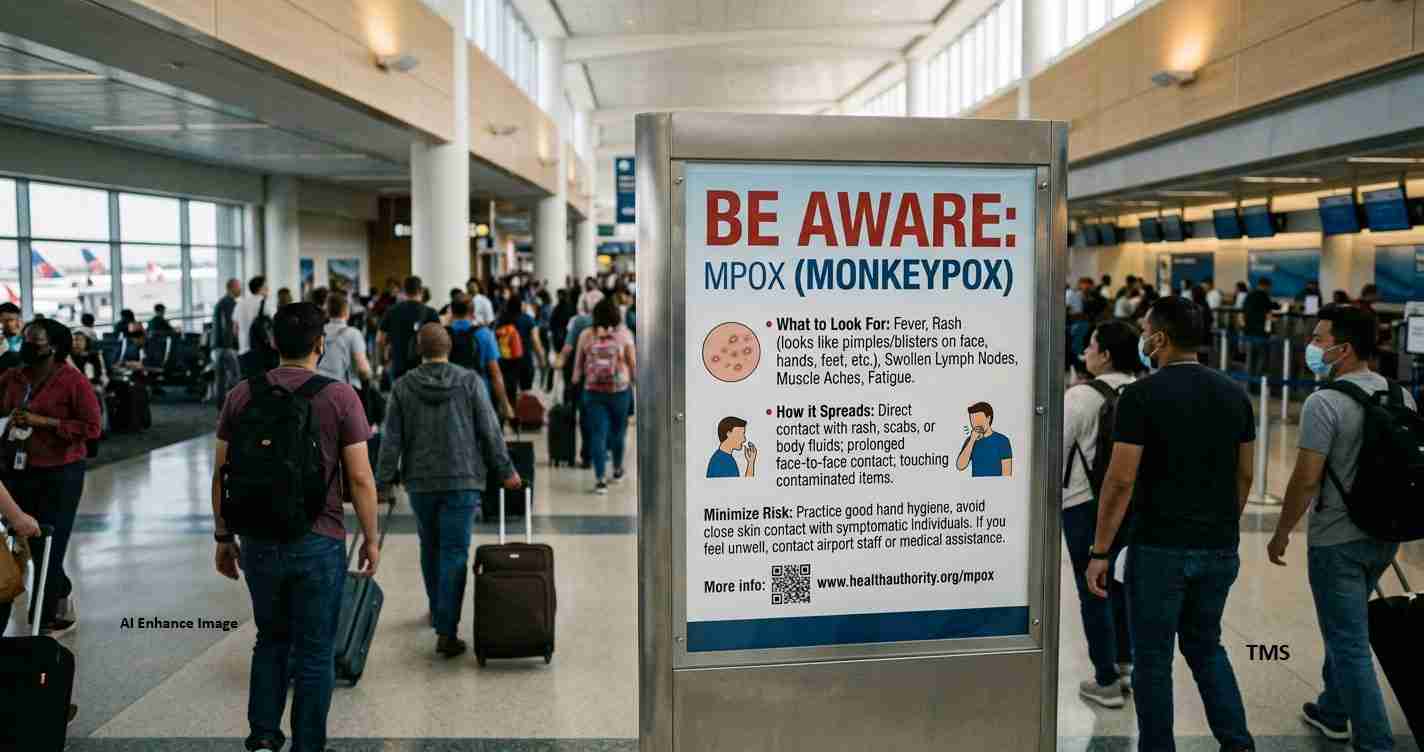
Mpox symptoms can include fever, headache, muscle aches, back pain, low energy, swollen lymph nodes and a characteristic rash or mucosal lesions that typically last 2–4 weeks. Transmission occurs through close personal contact (including sexual contact), contact with contaminated objects, respiratory secretions during prolonged face-to-face contact, and exposure to infected wildlife (WHO; CDC).
While Clade I infections in Central and Eastern Africa have sometimes caused more extensive rashes and complications, documented Clade I cases in the U.S. have so far been mild and managed in isolation. Public health authorities recommend vaccination with JYNNEOS for people at higher risk and for close contacts when appropriate; the two-dose series provides the best protection (CDC).
Global picture: outbreaks in Africa and travel links
Since late 2023, Clade I has driven a substantial burden of illness in parts of Central and Eastern Africa, with tens of thousands of confirmed cases and reported deaths in those regions (WHO; Africa CDC). These outbreaks have sometimes spread beyond endemic regions through travel; some recent European cases were linked to importations.
The global pattern underscores that mpox has not disappeared. WHO and regional health agencies continue to monitor trends and advise surveillance, testing, vaccination, and clinician awareness as priorities (WHO; CDC).
Hantavirus reports in Europe — what we know
Separately, the WHO hantavirus fact sheet notes newly reported hantavirus infections in parts of Europe, including Spain and France. Hantavirus disease is rare but can be severe; it is typically spread through contact with infected rodents or their droppings and in some cases can cause life-threatening respiratory illness.
Officials stress the two are unrelated: hantavirus is rodent-borne and affects lungs/kidneys in severe cases, while mpox is an orthopoxvirus spread through close contact and contaminated materials. There is no evidence linking the recent European hantavirus reports to mpox activity (WHO hantavirus; WHO mpox).
Verifying details and correcting early reports
Some early or local reports contained inconsistent details. For example, the first confirmed U.S. Clade I case was in California in November 2024, not in Connecticut. State public health department acronyms can cause confusion: CDPH typically refers to the California Department of Public Health, while Connecticut uses CT DPH. Reported quotes and local statements should be checked against official releases from relevant state health departments and federal agencies (CDC HAN alert).
Reporting tips for clinicians and the public
- Clinicians: Consider mpox in patients with compatible symptoms and exposure history; report suspected cases to local public health authorities and submit specimens per CDC guidance.
- Laboratories: Follow CDC testing guidance to help identify clades when indicated (CDC HAN alert).
- Public: Reduce risk by avoiding close contact with people who have unexplained rashes, practicing good hand hygiene, avoiding handling sick or dead wild animals, and seeking vaccination if eligible (CDC).
Implications for the world
Economic impact
Travel, tourism and events could see short-term drops in bookings or tighter screening at entry points if reports of Clade I mpox or hantavirus increase. However, with limited community spread so far, major economic disruption is unlikely if cases remain small and contained (WHO; CDC).
Low-volume but severe cases of Clade I or hantavirus can increase local healthcare burdens. Investing in vaccines and rapid diagnostics is more cost-effective than treating large outbreaks.
Political consequences
- Cross-border coordination: The situation highlights the need for global surveillance and data-sharing; agencies may push for stronger reporting and lab networks to detect clade differences and emerging zoonoses (WHO; Africa CDC).
- Public messaging: Governments must balance clear warnings with calm guidance to avoid panic; accurate, timely communication will be politically important during travel seasons and large gatherings.
Social effects
Public awareness of mpox symptoms and transmission may change behavior at festivals, clubs, and other close-contact settings. Stigma against affected groups is a risk; public health messaging must avoid discrimination while targeting prevention (WHO).
More people with rashes or respiratory symptoms may seek testing, potentially straining clinics if not planned for.
Cultural relevance
Festival and event organizers should consider screening, on-site health advice, and vaccination access for participants. Messaging must be culturally sensitive, especially in regions with ongoing mpox outbreaks in Africa where health systems are already stressed (Africa CDC).
Practical applications for governments and individuals
- Strengthen surveillance: Fund lab sequencing to quickly distinguish Clade I from Clade II and share data internationally (CDC).
- Vaccination access: Expand targeted availability of JYNNEOS for at-risk groups and contacts; public information should explain eligibility and locations (CDC).
- Rodent control & hygiene: For hantavirus, local rodent control, safe cleaning of contaminated areas, and public guidance reduce risk (WHO hantavirus).
- Travel advice: Travelers should check health advisories, get vaccinated if eligible, and seek care for symptoms after travel.
Sources and further reading
- World Health Organization — Mpox fact sheet
- CDC — Mpox situation summary
- CDC — About mpox (symptoms, transmission, vaccine)
- CDC — HAN alert on Clade I detection and lab guidance
- CDC — Mpox outbreaks background
- Africa CDC — Mpox information
- KQED — Reporting on Clade I mpox case in San Francisco and vaccine access
- World Health Organization — Hantavirus disease fact sheet
Note: Public health agencies will continue to update guidance as surveillance data evolve. Monitoring, vaccination where recommended, and clear communication remain the main tools to limit spread and protect communities.