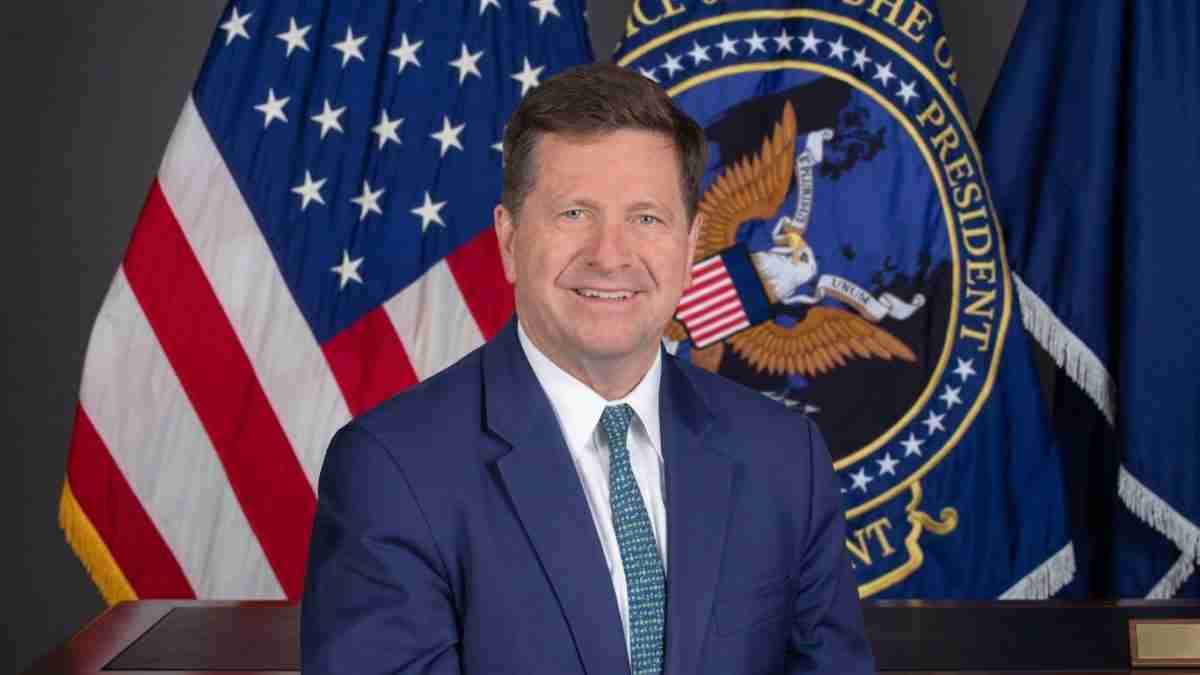
WASHINGTON, Oct. 4 (Infinite Headlines) — A new federal artificial intelligence task force will review the technology’s risks, examine how the government responds to AI-related incidents and recommend what role Washington should play. Its first assignment is a report due within 120 days, Director of National Intelligence Jay Clayton told The Wall Street Journal.
President Donald Trump announced on Sunday, Oct. 4, 2026, that Clayton would lead the group, called the “Super Intelligence Force.” In his Truth Social announcement, Trump described a body that would coordinate federal AI efforts and engagement with groups outside government.
What will the task force do?
The group’s work combines a broad policy review with a closer look at how federal agencies handle problems involving AI.
According to the task-force charter described by The Wall Street Journal, it will review AI-related risks and existing government systems for reporting breaches, hacks and other incidents. It will also recommend ways to strengthen the federal response using powers the government already has.
Clayton told the Journal that the 120-day report would assess both risks and opportunities and recommend the federal government’s role. That assignment is to produce recommendations, rather than a new set of rules.
The Washington Examiner also reported that the task force would discuss possible legislative options for an AI framework. That would put potential changes to the law alongside the charter’s focus on action under existing authority.
What does Trump want it to achieve?
Trump said the effort was intended to maintain U.S. leadership in what he calls “super intelligence,” protect Americans’ interests and improve their lives. He described the technology’s potential scale in sweeping terms, writing that “many say” it is “bigger than the Industrial Revolution, and the Internet.”
Clayton described the president’s instructions in his Journal interview: “The president asked that a group be put together that was going to ensure exactly what he said, which is that we stay the leaders in superintelligence, and that the interests of the American people are put first.”
The task force’s stated goals reach beyond companies developing the technology. Trump said it would coordinate government engagement with several groups affected by AI policy.
“The Super Intelligence Force will coordinate the Federal Government’s engagement with Consumers, Public Interest Groups, Religious Organizations, Critical Infrastructure Providers, and Super Intelligence Companies,” he wrote.
Who will lead the group?
Alongside Clayton, Trump named Federal Trade Commission Chairman Andrew Ferguson, Pentagon chief technology officer Emil Michael and Office of Personnel Management Director Scott Kupor among the force’s leaders. Michael is also the undersecretary of defense for research and engineering. Trump said the group would report to him and White House Chief of Staff Susie Wiles.
The Washington Examiner reported that Vice President JD Vance, Treasury Secretary Scott Bessent, venture capitalist David Sacks and former Secretary of State Condoleezza Rice would also serve on the task force.
What is Clayton’s background?
Clayton previously chaired the Securities and Exchange Commission and served as U.S. attorney for the Southern District of New York, NBC News reported.
He testified at a Senate Intelligence Committee confirmation hearing on July 15, 2026, according to The Columbian. At that hearing, Clayton called AI a “game changer.”
The Senate confirmed him as director of national intelligence in July, CNBC reported, and he took up the position in August, according to CBC.
How did the announcement develop?
The week before the announcement, Trump hosted AI-company executives at the White House and said they had signed a voluntary accord on the technology. He also told reporters that he planned to name an AI czar within three or four days.
NBC News reported on Friday that Clayton was expected to receive the role. CBS News separately reported before Sunday’s announcement that he was likely to be chosen, citing unnamed sources.
CBS News identified leaders from OpenAI, Anthropic, Google, Meta, Nvidia and SpaceXAI among those who attended the earlier White House meeting.