
Desert Graveyard of Diesel: Inside Volkswagen’s Victorville Storage Site and the Fallout of Dieselgate
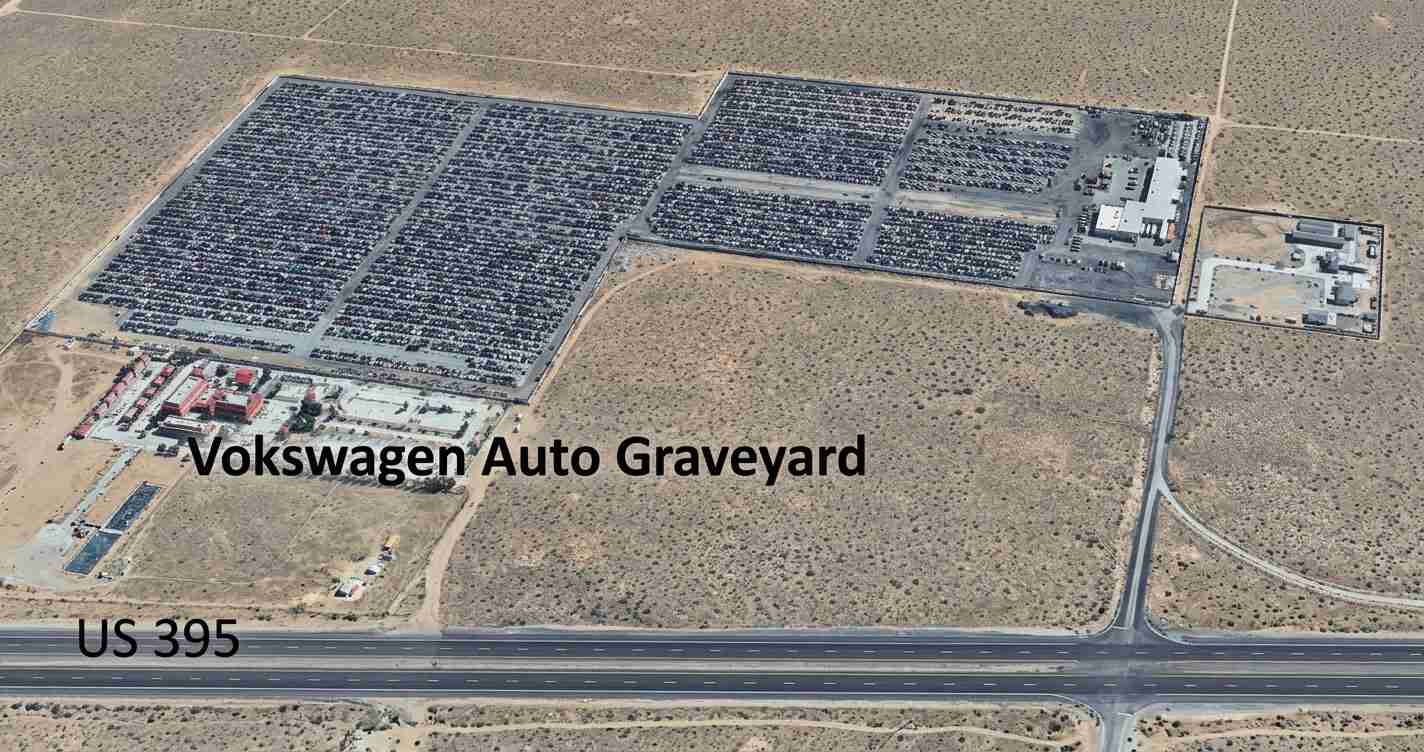
In Victorville, California, Volkswagen stored tens of thousands of recalled diesel cars in the Mojave Desert after the 2015 Dieselgate scandal, using the dry climate to prevent corrosion while vehicles awaited court-ordered emissions fixes, buybacks or resale.
- Defeat devices exposed: U.S. regulators found software that masked real-world NOx emissions during testing, affecting hundreds of thousands of cars.
- Large-scale storage: Volkswagen rented vast lots, notably the Mojave site near Victorville, to hold recalled cars while legal and technical fixes proceeded.
- Costly settlement: A 2016 U.S. agreement required roughly $14.7 billion for buybacks, repairs and mitigation.
- End results: Most cars were repaired and resold or scrapped; the desert images remain a potent symbol of the scandal.
Background on Dieselgate
September 2015 brought a major enforcement notice: U.S. regulators discovered Volkswagen had equipped many 2.0‑liter diesel models with software that detected emissions testing and altered controls to pass lab tests while allowing much higher on-road nitrogen oxide (NOx) emissions — in some cases roughly 35–40 times legal limits. The deception affected models including Jetta, Passat, Golf, Beetle and certain Audi A3 variants, and Volkswagen later admitted the fraud. Sources: CPA Journal; Wikipedia.
Buyback and storage logistics
After the scandal, most American owners accepted buybacks in the settlement, forcing Volkswagen to retake possession of very large numbers of cars. U.S. environmental authorities prohibited resale until EPA and state regulators approved repairs or modifications. To store these vehicles cheaply and safely, Volkswagen leased several large, low-cost tracts of land. The Mojave Desert’s dry air reduced rust and corrosion, making it a practical choice while legal, technical and regulatory steps were completed. Source: CPA Journal; settlement reporting.
Victorville: a deliberate choice
The storage lot near Victorville, close to Adelanto in the Mojave, became the most visually striking site. Aerial photos captured tens of thousands of Volkswagens and Audis parked in regimented rows on desert ground. Company records and media reporting indicate the location was chosen for both environmental conditions and cost. Volkswagen also used other sites — including a rented stadium in Detroit and a former paper mill in Minnesota — but Victorville stood out for scale and stark visual impact. Sources: CPA Journal; Wikipedia.
Maintenance, inventory and the later fate of the cars
The lots were actively managed. Volkswagen employed full-time maintenance crews to start engines, move vehicles, check batteries and tires — all intended to keep cars in resalable condition once regulators approved fixes. Over time most recalled cars were either modified and resold or, if too damaged or aged, scrapped. The buyback program, combined with repair and resale efforts, formed the practical endgame mandated by legal remedies. Source: CPA Journal.
Outcomes, costs and accountability
In 2016 Volkswagen agreed to a U.S. settlement of roughly $14.7 billion, covering buybacks, repairs, lease terminations, environmental mitigation projects and investments in zero‑emission technology. Criminal and civil investigations followed; some executives faced scrutiny and charges, and the company launched global recalls plus software and hardware updates. The episode reshaped regulatory scrutiny and consumer trust in diesel technology. Source: U.S. Department of Justice; CPA Journal.
What the records show and what remains uncertain
Public sources agree on the broad facts: defeat devices, mass buybacks, and large storage sites including Victorville, along with a costly legal settlement. Exact vehicle counts for specific lots and day-to-day maintenance practices come from journalist reporting and company disclosures; no major sources contradict the overall account. By the mid‑2020s most affected cars had been repaired and returned to the market or scrapped, and temporary storage areas were largely cleared, though the memory of the desert lots endures. Sources: CPA Journal; Wikipedia; U.S. Department of Justice.
Implications for the World
Economic impact
The settlement reshaped industry costs and priorities. The roughly $14.7 billion U.S. settlement and global fines redirected company resources toward compliance, buybacks and electric‑vehicle investment, affecting suppliers, dealerships and used‑car markets worldwide. Governments also faced enforcement and mitigation costs. Source: U.S. Department of Justice.
Political consequences
Dieselgate strengthened regulators’ resolve to tighten emissions testing and oversight. In Europe and the U.S., the scandal prompted stricter laboratory and on-road testing rules and accelerated political support for low‑emission transport policies. Source: Wikipedia.
Social effects
Consumer trust in automakers’ environmental claims suffered. Many drivers faced uncertainty about vehicle value and future costs. The image of a desert lot full of cars became a powerful symbol of corporate failure and environmental cost, fueling public demand for clearer protections and pollution controls. Source: CPA Journal.
Cultural relevance
Dieselgate served as a case study in reputational damage and corporate responsibility, reshaping debates about what constitutes “clean” transport — particularly in regions that had promoted diesel as a lower‑CO2 option. Source: reporting and public debate (Wikipedia).
Practical applications
Regulators tightened test regimes, including on‑road testing to better capture real‑world emissions. Automakers increased investment in electric vehicles and transparency. For consumers, the episode highlighted the need to vet environmental claims and demand stronger oversight. The Victorville images remain a cautionary visual of costly corporate shortcuts. Sources: U.S. Department of Justice; CPA Journal.
Reporting notes
This account synthesizes publicly available reporting and legal records. Key sources include CPA Journal, the Wikipedia summary of the scandal, and the U.S. Department of Justice statement on the settlement. Exact vehicle counts for specific lots such as Victorville derive from industry reporting and company records; broad figures reflect buyback scale and legal requirements.
“The visual memory of thousands of cars parked in the Mojave endures as a symbol of the crisis.”



