
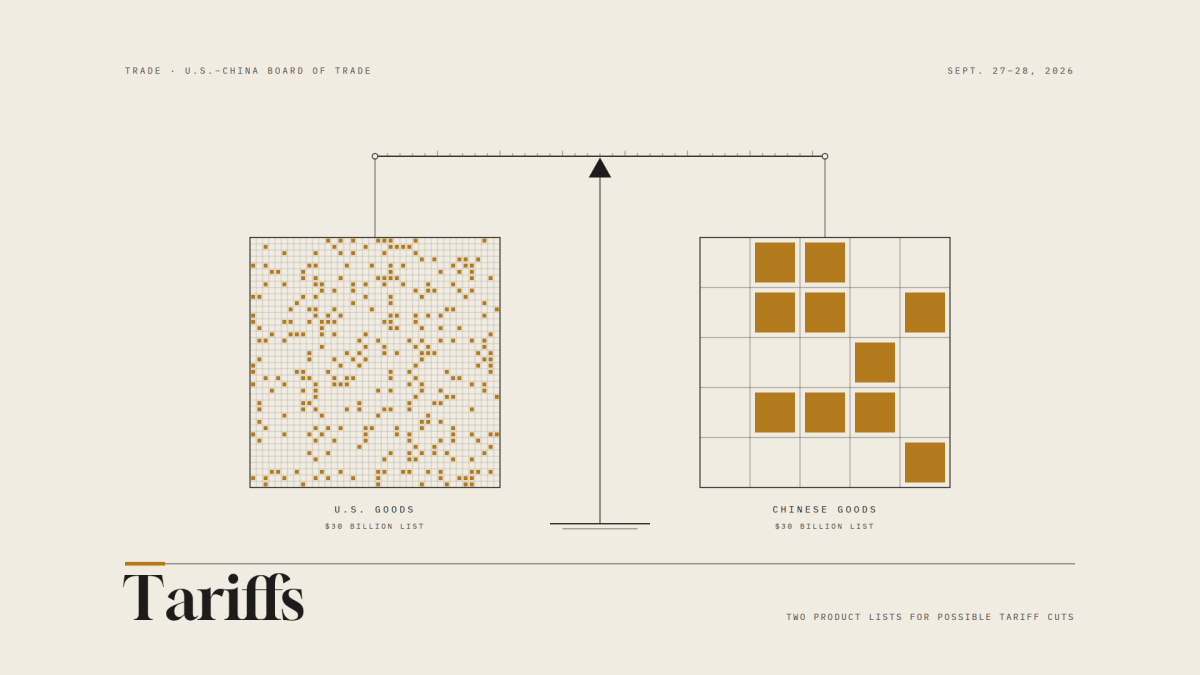
WASHINGTON, Sept. 29 (Nationwide Times) — The United States and China have identified about $30 billion in goods moving in each direction that could receive lower tariffs after a summit between Presidents Donald Trump and Xi Jinping. For businesses, the step identifies products that might become cheaper to trade. It does not yet change what importers pay.
The White House said the two countries had reached agreement on recommendations for more favorable tariff treatment for nonsensitive goods. U.S. Trade Representative Jamieson Greer said the products could benefit from that treatment in the future. China’s Ministry of Commerce said the sides would discuss a reciprocal tariff-reduction framework and aim to reach a consensus.
That distinction matters to farmers, manufacturers and importers weighing costs. The roughly $30 billion on each side refers to the value of goods under consideration, not the amount of tariff savings. The governments have not specified final rates or an effective date, so businesses cannot yet calculate how much their costs might change.
The published lists cover 1,619 categories of U.S. goods entering China and 77 categories of Chinese goods entering the United States. The U.S. list includes farm goods, timber, medical equipment and coal; the Chinese list includes fireworks and Christmas ornaments. The difference in the number of categories does not change the stated goal of covering roughly equal trade values in each direction.
China’s Ministry of Commerce said more than 90% of the listed products would be subject to most-favored-nation tariff levels under the proposed approach. But the final terms still matter: a product’s place on a list is not a guarantee that its importer is paying a lower tariff now, or that it will qualify under any eventual rules.
Greer said U.S. farmers, manufacturers, businesses, workers and consumers could benefit. China’s Ministry of Commerce pointed to potential gains for exporters of the affected goods. Whether those gains materialize depends on the rates, eligibility rules and start date the two governments have yet to set.



