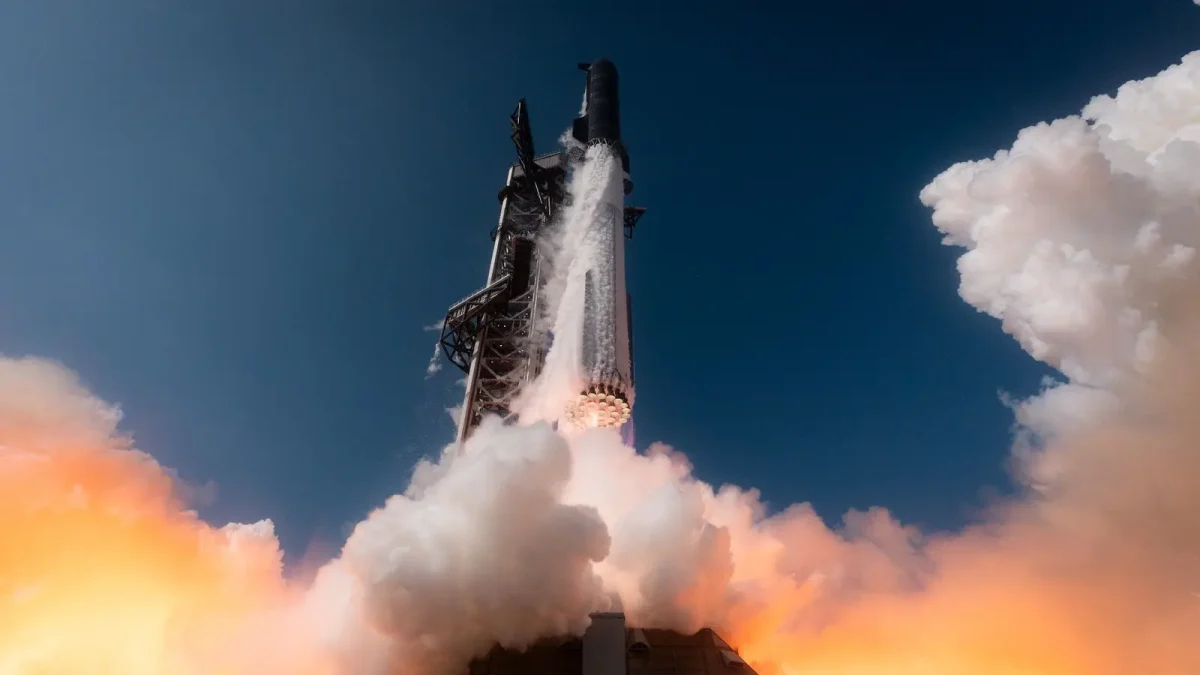
LOS ANGELES, Sept. 29 (World Daily Times) — SpaceX’s Starship reached orbit for the first time on Sept. 28, 2026, and released 26 Starlink V3 satellites. The test also ended much sooner than planned after an engine shut down early during ascent. It showed that Starship could reach orbit and deploy a payload on this flight, but it did not complete the full mission SpaceX had planned.
What happened during the flight?
Starship lifted off from SpaceX’s Starbase facility in Texas on its 14th integrated test flight. After the Super Heavy booster separated, one of Starship’s engines shut down prematurely. SpaceX’s flight team assessed the vehicle and authorized the engine firing needed to enter orbit. Mission Control then confirmed Starship was orbital.
Once in orbit, Starship released 26 satellites for Starlink, SpaceX’s satellite internet network. Elon Musk said on X that all 26 were “operating nominally.” SpaceX said it had made contact with them through laser links, ground stations and user terminals. Those reports establish initial contact and SpaceX’s assessment of the satellites; they do not establish that the satellites have finished their checks or begun serving customers. SpaceX said orbit-raising and checkouts would come first.
Why did the mission end early?
SpaceX had planned a flight of roughly 10 hours but brought Starship back after about three. The company said it made the decision “out of an abundance of caution” following the engine issue. It has not established in the available account what caused the engine to shut down.
Starship reentered and splashed down in the northern Pacific Ocean. Reuters and The Associated Press reported flames after it contacted the water.
What does the result mean?
Reaching orbit and releasing satellites were major goals of this test. Ending the flight early means it did not demonstrate the rest of the planned mission. Musk’s assessment of the satellites is also an early status report, not a final account of their orbits or performance in service.