7-ton asteroid fragments over Lake Erie, triggers rare Northeast Ohio meteor sonic boom
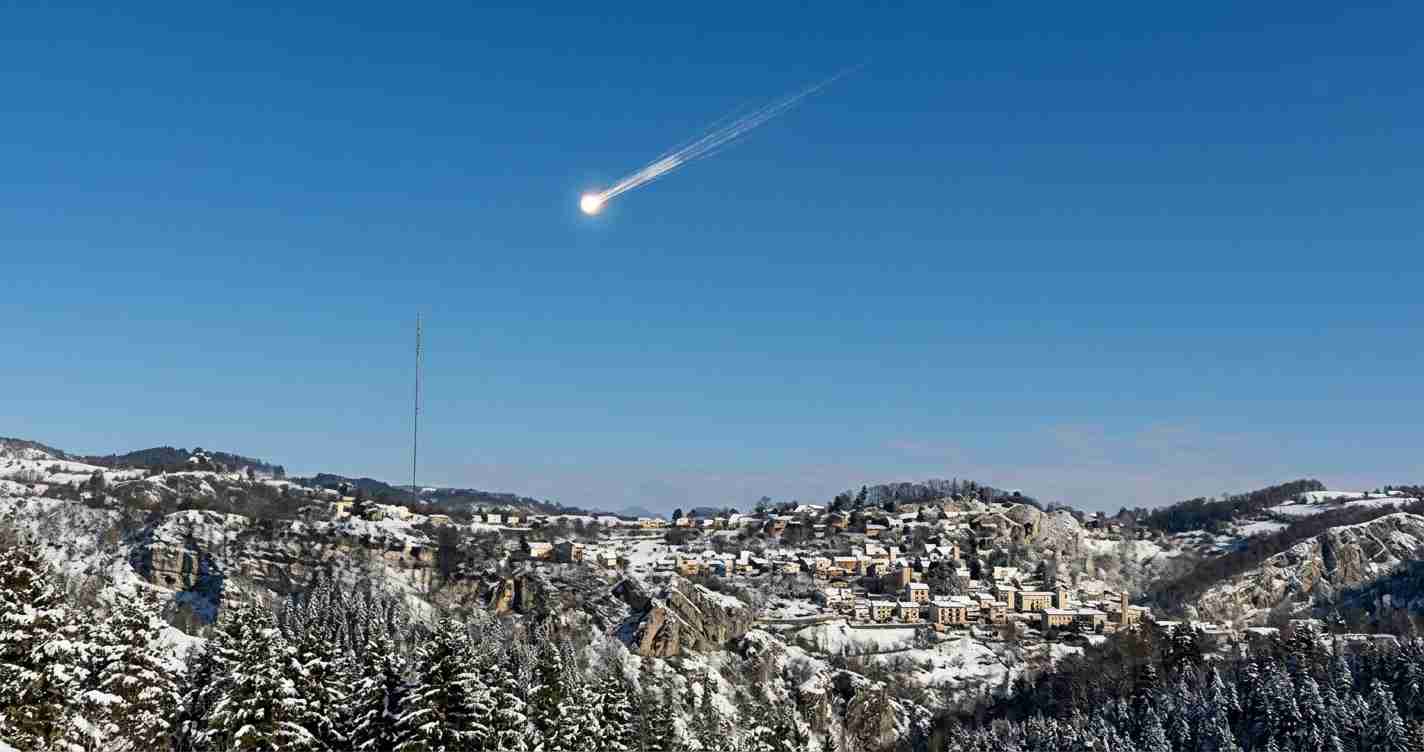
Just before 9 a.m. ET on March 17, 2026, a roughly 6-foot, 7-ton asteroid exploded over Lake Erie, fragmenting above Valley City, Ohio, producing a daylight fireball and successive sonic booms releasing energy equivalent to about 250 tons of TNT.
Key takeaways
- What: A ~6-foot, ~7-ton asteroid entered the atmosphere, creating a bright daylight fireball and multiple sonic booms.
- When & where: Just before 9 a.m. ET on March 17, 2026, first seen over Lake Erie near Lorain, fragmenting about 30 miles above Valley City (north of Medina County).
- Energy & effects: Fragmentation released roughly 250 tons of TNT equivalent; pressure waves produced successive booms heard across the Ohio Valley.
- Damage & recovery: No immediate reports of damage or injuries; officials have not yet confirmed recovered meteorites.
Event overview
A small asteroid about 6 feet in diameter and weighing roughly 7 tons entered Earth’s atmosphere just before 9 a.m. ET on March 17, 2026. The object traveled at about 40,000–45,000 mph, passed through more than 34 miles of the upper atmosphere and produced a bright daylight fireball visible across several states.
Primary reporting and initial scene-setting were described by Signal Cleveland and the Los Angeles Times.
Eagle-eyed observer captures dramatic footage
“Eagle-eyed,” the National Weather Service office in Pittsburgh called the employee who captured video of the meteor streaking across the morning sky.
The National Weather Service–Pittsburgh office shared video showing a bright white-blue fireball in daylight. That footage, along with multiple eyewitness reports, helped authorities confirm the object crossed Lake Erie and moved inland toward Valley City.
Eyewitness reports came from residents in Delaware, Indiana, Illinois, Kentucky, Maryland, Michigan, New York, Ohio, Pennsylvania, and the District of Columbia, describing a white-blue fireball that briefly brightened the daytime sky.
Path, break-up and meteorite potential
Officials traced the meteor’s path to a point roughly 50 miles above Lake Erie near Lorain. The object moved southeast and began to fragment about 30 miles above Valley City. After traveling more than 34 miles through the atmosphere, the main breakup released large amounts of energy and produced multiple fragments that continued southward.
Searchers identified a likely corridor over Medina County where small meteorites could have reached the ground. NASA notes most meteors of this size break up high in the atmosphere and typically less than 5% of the mass reaches the surface.
Why the sonic boom was so loud
When the asteroid fragmented it released energy equivalent to roughly 250 tons of TNT, creating a powerful pressure wave. Moving at tens of thousands of miles per hour — far faster than the speed of sound — the object produced sonic booms.
Unlike a single boom from a jet, the asteroid’s breakup along its 34-mile path generated multiple, successive booms as fragments separated. That pattern explains reports of a series of loud bangs heard across Northeast Ohio.
Safety, reporting and recovery efforts
Local authorities and county emergency management teams reported no immediate damage or injuries. Officials urged residents to avoid handling any suspected meteorite fragments and to report finds to local authorities or scientific teams to preserve the specimens for study.
Volunteers, university researchers and local officials may organize searches. Specialists look for fusion crust and determine whether recovered pieces are stony or metallic; such analyses help scientists learn about the origins of near-Earth objects.
What scientists say
NASA’s Meteoroid Environments Office confirmed the fireball and provided details on altitude and fragmentation. Officials said the asteroid likely originated from the main belt or a near-Earth orbit and emphasized that while rare in populated areas, such events are part of Earth’s routine encounters with small space rocks.
Scientists also noted that daytime fireballs are harder to spot; daylight washes out fainter meteors, so the Valley City event’s visibility suggests it was both bright and relatively low when it broke apart.
Implications for the world
Economic impact
For most people, direct economic effects are unlikely. There were no reported damages or injuries. Local search efforts and scientific work could bring modest spending to the area for equipment and coordination.
Political consequences
The event underscores the need for continued international cooperation on space monitoring and planetary defense, potentially renewing political interest in funding telescopes, radar and data-sharing initiatives.
Social and cultural effects
Residents reported surprise and concern; such events can both test public confidence in emergency systems and spark widespread interest in science, outreach and citizen science contributions.
Reporting and follow-up
Scientists continue to analyze weather radar, infrasound sensors and eyewitness videos to refine the meteor’s trajectory and to estimate whether any meteorites fell to the ground. Credible finds will be examined by meteorite experts to determine composition and origin.
Members of the public who think they may have found a fragment are urged to report it to local authorities and to avoid handling or disturbing potential specimens prior to expert examination.
Sources
Note: Officials have not confirmed recovered meteorites; NASA estimates that most meteors of this size break up in the atmosphere and that less than 5% of the mass typically reaches the ground.