OXFORD, United Kingdom, Oct. 12 (World Daily Times) — Scientists examining deep-sea samples from Argentina’s submarine canyons identified 57 marine species and five proposed genera new to science, Ocean Census and the Schmidt Ocean Institute announced. The result comes from a two-week taxonomic workshop: an effort to identify and classify collected animals, rather than a count of all the species living in the region.
The organizers describe the findings as new to science. That means the animals were recognized as previously undescribed species, not that they had only recently appeared in the ocean.
What did the researchers identify?
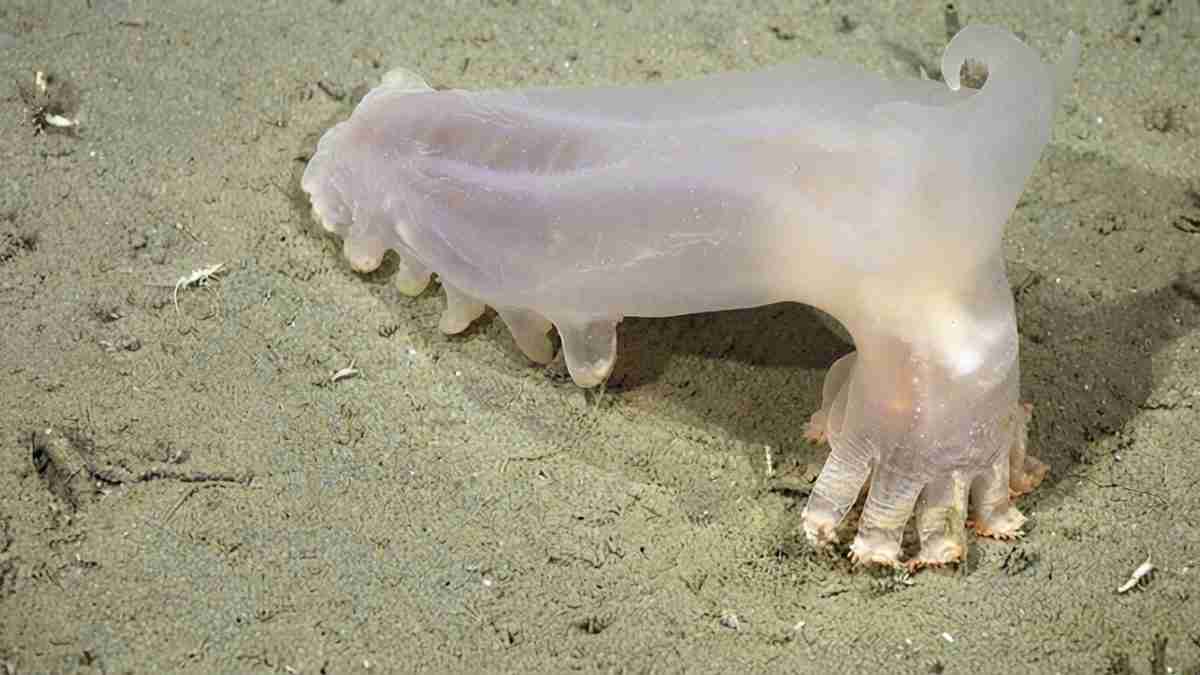
The organizers reported four main groups: 20 copepod species; 22 echinoderms, including sea cucumbers and crinoids; 14 cnidarians, including octocorals, sea pens and stony corals; and one scaphopod mollusc.
These are different branches of the animal family tree. Copepods are crustaceans. Echinoderms include sea cucumbers and crinoids, while cnidarians include the various corals examined at the workshop. The scaphopod belongs to the mollusc group.
The five proposed new genera span corals, sea cucumbers and crustaceans, according to the organizers. A genus is a classification level above species that groups related organisms. The five genera therefore represent another level of classification, not five extra species to add to the total of 57.
Where did the samples come from?
Most of the material came from the Schmidt Ocean Institute’s Underwater Oases of the Mar del Plata Canyon expedition off Argentina in the South Atlantic, the organizers said. The expedition used the institute’s research vessel Falkor (too) and its remotely operated vehicle SuBastian to collect deep-sea marine life.
Ocean Census dates that expedition to July 23–August 10, 2025. The collection work and the later identification workshop were separate stages of the project: animals collected at sea became specimens for specialists to examine on land.
The workshop also had older collections to draw on. Ocean Census said marine life collected during the Talud Continental I–III expeditions in 2012–2013 would be examined. Those expeditions were led by CONICET, Argentina’s National Scientific and Technical Research Council.
How were the animals studied?
The workshop ran July 13–24, 2026, at Universidad Maimónides in Buenos Aires. According to the organizers, 20 taxonomists and early-career researchers from Latin America and Europe took part, using integrated taxonomy techniques. Taxonomy is the science of identifying, naming and classifying living things; an integrated approach brings different kinds of evidence together.
Tech Times reported that researchers carried out morphological examination, high-resolution imaging and targeted DNA barcoding in parallel. Morphological examination compares physical features, while imaging records fine details. DNA barcoding uses selected stretches of genetic material to help distinguish organisms.
The researchers logged their discoveries on Ocean Census NOVA, which the organizers describe as an open-access platform for newly discovered marine species. The announced total is the workshop’s identification result; it should not be read as a measure of the canyon’s entire biodiversity.
What does the copepod finding cover?
Tech Times reported that all 20 copepods examined from a single harpacticoid collection were considered new species. The outlet also reported that the collection represented 10% of returned samples and that 90% of the copepod material remained unexamined.
Those percentages concern the collection described by Tech Times. They are not a count of all marine life in the canyon, and they do not establish how many additional species might be identified in the remaining material.
Who contributed the specialist expertise?
Ocean Census identified researchers with expertise across the animal groups under examination. Daniel Lauretta, a Museo Argentino de Ciencias Naturales–CONICET researcher, and Ralf Cordeiro, a Universidade Federal Rural de Pernambuco researcher, focused on cnidarians and octocorals. Pablo López-González, a Universidad de Sevilla researcher, focused on cnidarians and sea pens, while Marcelo Kitahara, a University of São Paulo researcher, focused on cnidarians and stony corals.
Francisco Solís-Marín, a Universidad Nacional Autónoma de México researcher, brought expertise in echinoderms and sea cucumbers. Leonardo Chacón, a UC-EAP Instituto Monteverde researcher, focused on echinoderms and crinoids. Leonardo Santos de Souza, a Universidade Federal do Rio Grande do Sul researcher, focused on scaphopod molluscs, and Nancy Mercado Salas, a Leibniz Institute for the Analysis of Biodiversity Change researcher, focused on copepods.
CONICET identified Martín Brogger and Valeria Teso as local coordinators, Seven Seas Media reported.
Why bring researchers together?
The Nippon Foundation-Nekton Ocean Census led the workshop in partnership with the Schmidt Ocean Institute. Ocean Census identifies The Nippon Foundation and Nekton as its founding partners and says the workshop approach supports knowledge-sharing and research opportunities for early-career scientists.
“Discovering 57 new species and five new genera in just two weeks demonstrates the speed and power of collaborative taxonomy,” Michelle Taylor, Ocean Census head of science, said in a statement quoted by People.