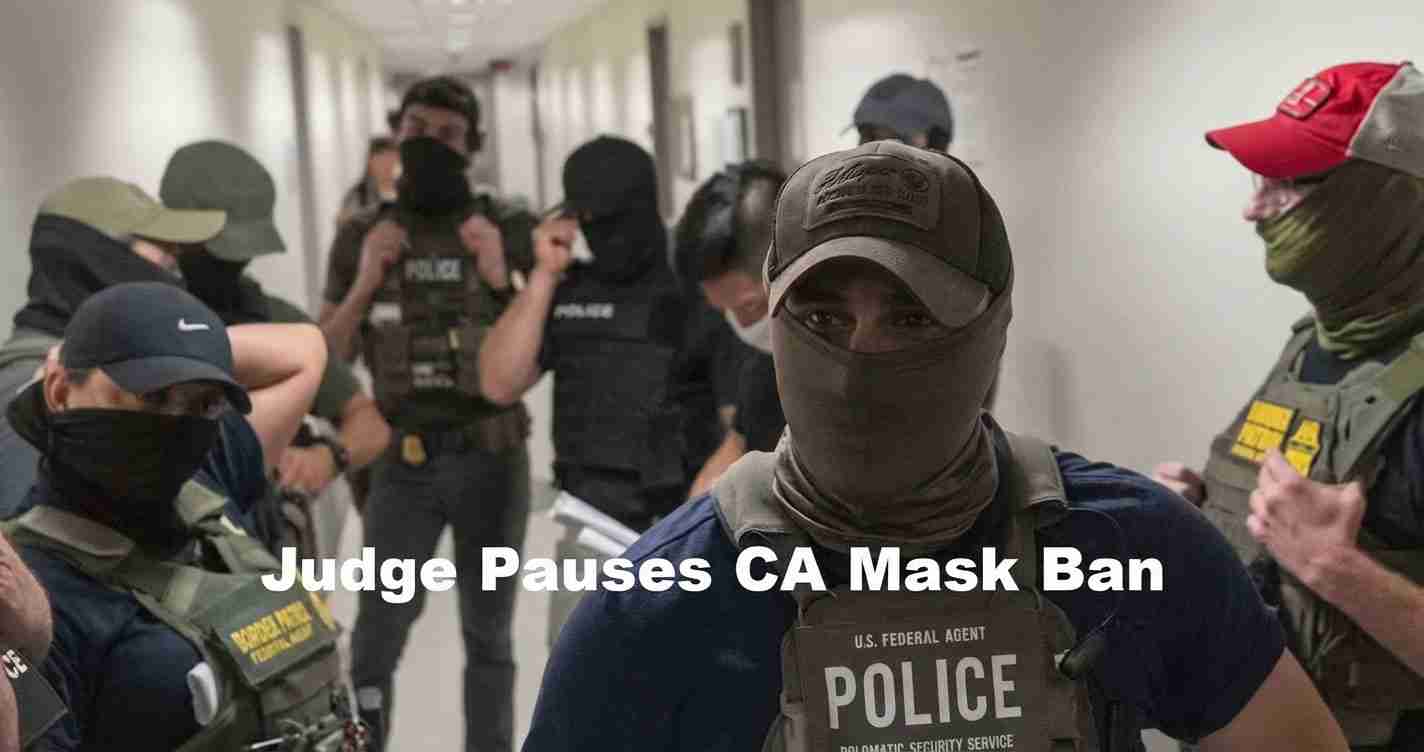
Federal judge blocks California mask ban for ICE, upholds police ID rule in Judge Christina Snyder ruling — California federal mask ban blocked
U.S. District Judge Christina Snyder
- Preliminary injunction: Snyder temporarily blocked the No Secret Police Act (Senate Bill 627), pausing enforcement while the case proceeds.
- Constitutional issue: The judge found the mask ban unlawfully discriminates against federal officers by not applying equally to state and local officers.
- ID requirement upheld: Snyder allowed the No Vigilantes Act (SB 805) to remain in effect, requiring visible name or badge numbers for officers.
What the court said and why it matters
Judge Christina Snyder, appointed during the Clinton administration, issued a preliminary injunction against the No Secret Police Act because the law singled out federal agents while exempting certain state officers. The ruling centered on the Supremacy Clause, which holds federal law supreme when conflicts arise.
“treats federal law enforcement officers differently than similarly situated state law enforcement officers,”
Snyder explained that a state may not impose requirements that uniquely bind federal officers and thereby interfere with federal duties. The injunction prevents California from enforcing the mask ban while litigation continues; it is not a final determination on all possible versions of the law. For details on the injunction and how the court described the discrimination, see the FOX 11 Los Angeles coverage and reporting from KTVZ / CNN politics feed.
The identification law that survived challenge
Snyder upheld the No Vigilantes Act (SB 805), which requires officers — federal, state and local — to display a name or badge number while on duty. The court found this requirement applies equally and therefore does not conflict with federal supremacy. Coverage of the identification law and the court’s reasoning is available via California News Times.
Background: why the laws were passed
Both bills were signed by Governor Gavin Newsom in September 2024 after widely circulated video and reporting showed masked, unidentified federal agents — including some from the Department of Homeland Security — conducting immigration-related operations in Southern California. The laws aimed to increase transparency and accountability amid community concerns about masked federal operations.
The No Secret Police Act targeted primarily Immigration and Customs Enforcement (ICE) and included exceptions for undercover work, medical masks and tactical gear. State lawmakers framed the measure as addressing public safety and trust issues raised by those operations.
The federal challenge
The U.S. Department of Justice sued California in November, arguing the laws would impede federal operations and could endanger officers by exposing them to harassment or doxing. The federal government contended the mask ban would prevent agents from taking necessary safety precautions and from effectively carrying out federal duties; read the federal complaint context in reporting from California News Times.
Reaction from officials
- Supporters of the injunction: Federal-law-enforcement supporters welcomed Snyder’s decision; Pamela Bondi and others said the mask ban would have increased risks to agents (FOX 11 Los Angeles).
- California officials: Governor Gavin Newsom called the upheld identification requirement a “clear win for the rule of law,” stressing accountability. Attorney General Rob Bonta noted the court denied the federal request to block the visible-identification rule (KTVZ / CNN politics feed).
Lawmakers plan revisions
Senator Scott Wiener (D-11), a sponsor of the bills, said he will propose revisions to cure the constitutional defect Snyder identified. Wiener indicated a revised bill would expand mask restrictions to similarly situated state officers so the law would no longer single out federal agents. He has said the original drafting involved consultation with constitutional experts and the Governor’s office.
Why the Supremacy Clause mattered here
The Supremacy Clause ensures federal law prevails when state law conflicts with federal duties. Courts regularly enjoin state rules that interfere with federal functions or treat federal officers differently from state or local officers. Snyder applied these principles in finding the No Secret Police Act singled out federal agents and thus posed a constitutional problem (FOX 11 Los Angeles, KTVZ / CNN politics feed).
Possible next steps in court and the legislature
The preliminary injunction can be appealed to the Ninth Circuit if the federal government seeks reversal. Meanwhile, California legislators can revise the statute to apply equally to state and federal officers; Senator Wiener has signaled that path to address the court’s concerns without further prolonged litigation.
Implications for The World
Economic impact: The ruling likely has limited direct global economic effect but may affect enforcement patterns that influence local workforce stability in immigrant-heavy areas.
Political consequences: The dispute underscores tensions between state authority and federal power — a subject of interest in federations worldwide as governments weigh local rules for national enforcement agencies.
Social effects & cultural relevance: Communities seeking transparency may view the identification law as progress; advocates worried about immigration enforcement will watch for legislative changes balancing protection of residents with constitutional limits.
Practical applications: Law enforcement agencies, federal operators in California, and local governments should review operational protocols. With the injunction in place, federal agents can continue current safety practices while the legal and legislative processes unfold.