Appeals Court Finalizes End of Biden’s SAVE Plan, Forcing Millions to Reconsider Repayment Options
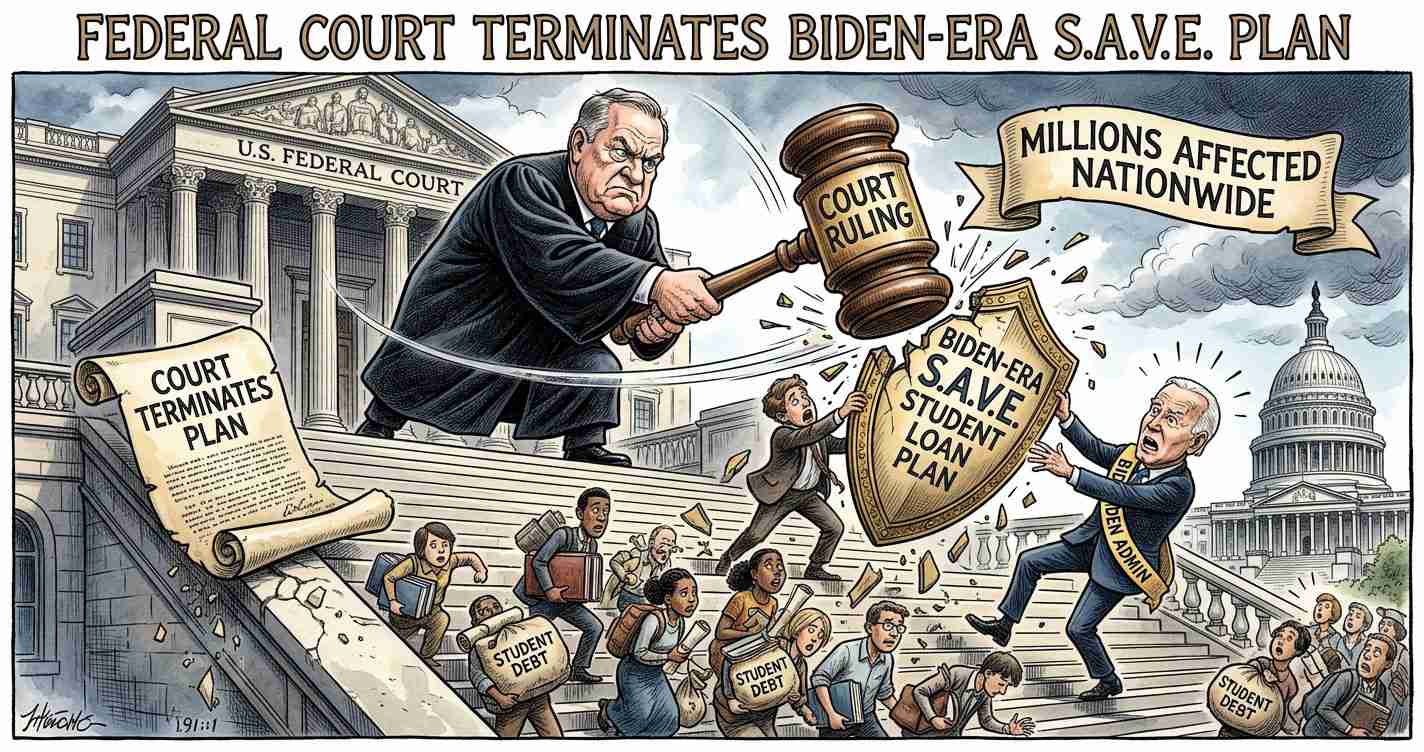
The 8th U.S. Circuit Court of Appeals finalized the termination of the Biden-era SAVE student loan plan on March 9, 2026, affecting more than 7 million enrollees who now must evaluate alternative repayment programs or face automatic enrollment.
Key takeaways
- The 8th Circuit’s March 9, 2026 ruling finalized the end of SAVE and reversed a lower court dismissal; see the U.S. Department of Education press release and an analysis.
- More than 7 million borrowers were enrolled in SAVE as of late 2025; many had payments paused under administrative forbearance, per the Department of Education press release.
- OBBBA creates the Repayment Assistance Plan (RAP), effective July 1, 2026, reshaping income-driven repayment options; see the summary of changes and the federal notice.
- Borrowers should act now: check federal guidance at StudentAid.gov court actions and use the Loan Simulator to estimate options.
What the court decided and why it matters
The 8th U.S. Circuit Court of Appeals reversed an earlier dismissal and finalized the end of the SAVE plan after a Republican-led legal challenge that began in 2024. Attorneys general from several states, led by Missouri, argued the administration exceeded its authority in crafting the SAVE plan without Congressional authorization. The Department of Education characterized SAVE as an unauthorized policy that would impose multibillion-dollar costs on taxpayers and reached an agreement with Missouri to wind down elements of the program; see the U.S. Department of Education press release.
Background: SAVE, launched in 2023, was promoted as “the most affordable repayment plan ever created,” featuring zero-payment options for low-income borrowers and a subsidy to prevent unpaid interest from increasing balances.
Supporters argued SAVE limited interest capitalization and accelerated progress toward forgiveness. Critics — including the state officials who sued — said it lacked clear legal authority and risked large long-term taxpayer liabilities. For more context, read the analysis.
Legal timeline and settlements
- April 2024: Multiple Republican state attorneys general filed suit challenging SAVE.
- July 2024: The Eastern District of Missouri issued a partial injunction leading to a 0% interest administrative forbearance for enrollees during litigation (see the Department of Education press release).
- February 2025: The 8th Circuit issued a broader injunction and remanded the case to the district court.
- December 9, 2025: The Department of Education reached a settlement with Missouri to end new SAVE enrollments, deny pending applications, and transition existing enrollees to legally authorized plans; the settlement also removed SAVE from federal regulations except to count forbearance toward forgiveness where allowed (see the press release).
- March 9, 2026: The 8th Circuit finalized the termination of SAVE by reversing the lower court’s dismissal, making the settlement and changes binding; see the analysis.
What borrowers need to know now
More than 7 million borrowers were enrolled in SAVE and many had payments paused under administrative forbearance. Those borrowers must act to avoid unwanted outcomes and should follow official federal guidance and loan servicer notices.
Immediate steps recommended:
- Check accounts and official guidance: visit StudentAid.gov court actions and use the Loan Simulator for estimates.
- Consider Income-Based Repayment (IBR): IBR sets payments at roughly 10%–15% of discretionary income over 20–25 years and remains available now as a likely option for many former SAVE enrollees (see IBR and RAP details).
- Prepare for RAP: under the summary of changes in the OBBBA, the Repayment Assistance Plan (RAP) begins July 1, 2026, using a 1%–10% sliding scale of AGI and requiring 30 years of payments for forgiveness.
- PSLF claimants: verify qualifying payments and submit pending applications. The Department has advised that months in SAVE forbearance will count toward PSLF where applicable; check records and file required paperwork (see the Department of Education press release).
Comparing the main alternatives
- Income-Based Repayment (IBR): 10%–15% of discretionary income, 20–25 year term; available now and may suit many former SAVE enrollees (see IBR and RAP details).
- Repayment Assistance Plan (RAP): Launches July 1, 2026; 1%–10% of AGI sliding scale and 30-year forgiveness timeline; primary IDR option for new loans after that date (see the policy summary).
- Standard, Graduated, Extended: Remain available for existing borrowers depending on loan vintage; choices for new loans after July 1, 2026 will be more limited (see summary of changes).
Broader law changes from OBBBA
The One Big Beautiful Bill Act (OBBBA) restructured federal student loan rules effective mid-2026. Key shifts include tighter borrowing limits, elimination of certain future-loan programs (such as Grad PLUS), restrictions on lengthy forbearance or deferment, and possible tax changes for forgiveness after 2025. See the policy overview and the federal note.
Administration and taxpayer perspectives
The Department of Education framed the court-ordered end of SAVE and OBBBA changes as necessary to protect taxpayers and ensure repayment policy follows statutory authority. State challengers maintained SAVE exceeded executive authority. Advocates warned ending SAVE removes a widely used benefit and could raise monthly payments for many households.
“Ending SAVE protects taxpayers according to the Department; critics say it removes an important borrower safeguard.”
Tools and resources for borrowers
Borrowers should monitor official notices from loan servicers and the Department of Education. Primary federal resources and tools include:
- StudentAid.gov court actions
- Federal Loan Simulator and repayment tools
- Department of Education press release on the SAVE settlement
Implications for the world
Economic impact: U.S. student loan decisions affect global markets, consumer spending, and education finance debates. Ending SAVE may change projected federal outlays and taxpayer liabilities, which markets and international investors will note.
Political consequences: The ruling illustrates how national politics and courts can rapidly alter social programs and may inform debates abroad about executive authority versus legislative oversight.
Social and cultural effects: Millions of borrowers face budget and life-plan adjustments. International students and foreign universities may see shifts in enrollment and planning tied to U.S. loan policy changes.
Reporting and verification
This article draws on the U.S. Department of Education press release, related reporting such as the analysis, and policy summaries on Federal Student Aid changes and the OBBBA federal note. Borrowers should rely on official federal pages and loan servicers for personalized guidance.
Need immediate guidance? Check your loan servicer notices, review the federal resources linked above, and use the Loan Simulator to compare scenarios.