Chevron warning: California’s eco rules and global turmoil could spark a California fuel crisis
Chevron executives warn California may face severe shortages of gasoline, diesel and jet fuel as geopolitical disruptions and strict state environmental rules converge — a mix that could threaten daily life, commerce and energy reliability unless policies or supply pressures change. Energy Newsbeat report
Key takeaways
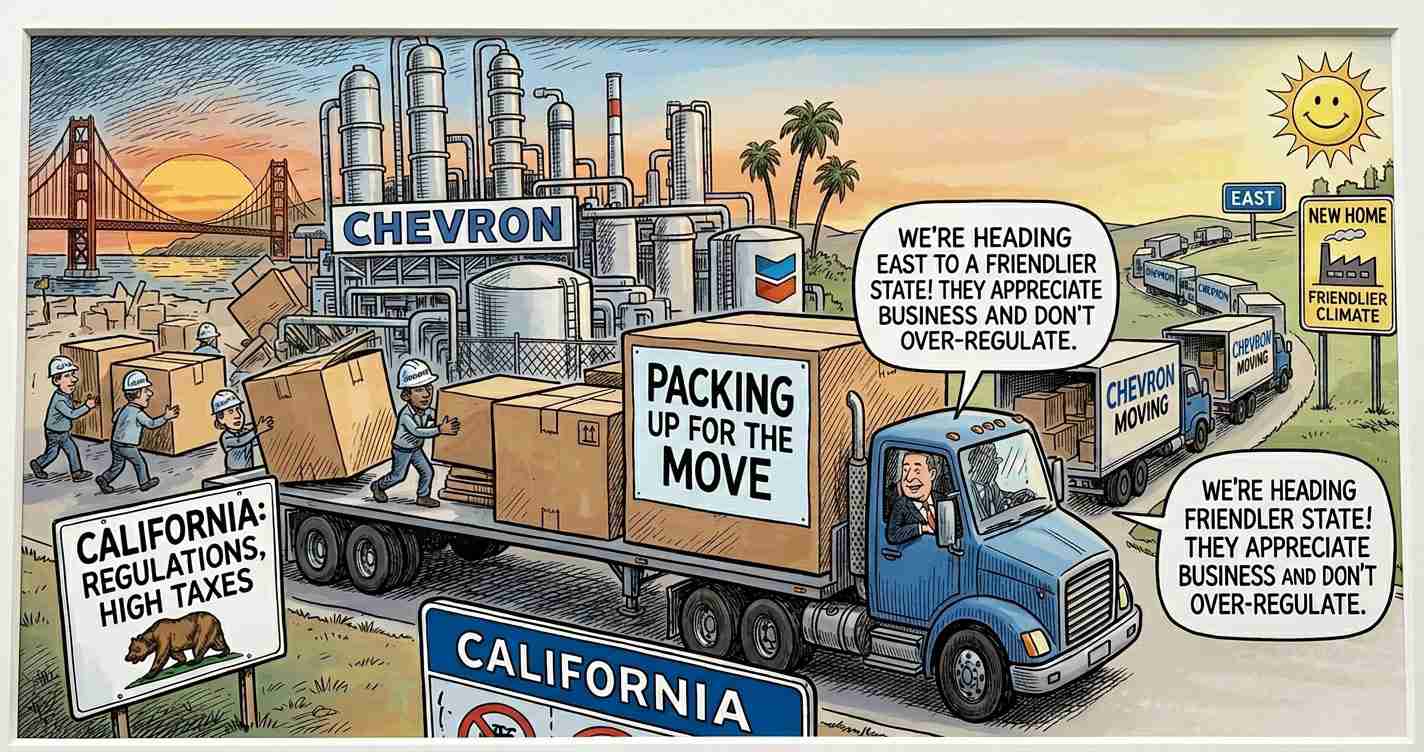
- Chevron may leave California within 10 years — the company warned state leaders that ongoing policies could make local refining uneconomic. Chevron may leave California within 10 years
- Supply squeeze from the Strait of Hormuz blockade has cut refining runs in Asian hubs that historically export refined fuel to California. Strait of Hormuz blockade
- Shutdown of Chevron facilities would remove ~34% of state refining capacity, a loss that would quickly tighten supplies of gasoline, diesel and jet fuel. cut state refining capacity by about 34%
- California is an energy island: few refineries, limited pipeline links, and heavy local refining dependence make the state highly vulnerable to disruptions.
Geopolitical and supply chain pressures
Chevron’s top refining official, Andy Walz, told state leaders the company is under severe stress as global conflicts reduce available fuel supplies. He warned the company’s “worst fear” is running short of critical fuels in major California cities. Chevron’s warning to state leaders
The immediate trigger is a widening global squeeze on refining: analysts estimate global refining capacity has fallen by about 2.8 million barrels per day and overall runs are down roughly 3–4%. That reduced output is hitting refining hubs in Asia — China, Singapore and India — which normally export refined fuels to states including California. Asian refining run impacts
California’s regulatory climate and economic burden
In a letter to Gov. Gavin Newsom, Chevron singled out California’s tightening environmental rules — including recent changes to the Cap-and-Invest program — as a major factor making refining more costly and risky. The company says stricter caps and higher compliance costs raise refining expenses, push up fuel prices and weaken energy reliability. Chevron on Cap-and-Invest
“The California energy industry’s economic, industrial, environmental, and national security benefits have been the foundation of a healthy, prosperous state and nation. Adversarial policies at local, regional and state levels have eroded that foundation.”
State regulators counter that the policies aim to cut emissions and protect public health and the climate. The tension frames a broader debate about balancing climate goals with energy reliability, and it has sharpened the standoff between industry leaders and policymakers. Policy vs. reliability debate
Infrastructure vulnerabilities and refinery decline
California is an “energy island”: limited pipeline connections to the rest of the U.S. and heavy dependence on in‑state refining mean local outages rapidly translate into shortages at gas stations and airports. The California Energy Commission reports more than 90% of gasoline used in the state is refined locally. California energy island risk
California once had roughly 40 refineries; today only about seven remain. Several operators have signaled plans to scale back or close. If Chevron — owner of two of the state’s largest refineries — were to shut operations, state capacity would fall by roughly a third, damaging supplies of gasoline, diesel and jet fuel. Refinery decline and Chevron’s role
Import dependence and supply risks
Beyond refined fuels, California imports large shares of petroleum, natural gas and electricity. With Asian refineries short of products because of the Strait of Hormuz impact, shipments bound for California face delays or cancellations — tightening options fast. Import risks from Asian shortages
Analysts warn of cascading effects: diesel shortages would hit farms and trucking; jet fuel shortfalls could force flight cuts and higher fares; and reduced fuel availability can strain emergency services and military logistics. Given California’s size, local problems can become national and international headaches. Cascading societal effects
What the numbers show
- Global refining runs down 3–4% and capacity cut by about 2.8 million barrels per day because of recent conflicts. Global refining losses
- ~20% of California’s refined fuels historically came from Asia, a vulnerable share when supplier refineries face shortages. Asia share of California fuel
- One large operator leaving would remove a large slice of capacity — amplifying shortages and price volatility. Operator exit risk
Implications for The World
Economic impact: A California fuel crisis would ripple through global markets — raising costs for goods, shipping and air travel and adding inflationary pressure. European businesses trading with or operating in California could face higher transportation expenses. Global economic implications
Political consequences: The standoff highlights a global dilemma: how to cut emissions while keeping energy systems reliable. Other governments will watch whether California loosens rules or sees major operators exit — both outcomes carry policy lessons. Policy dilemma
Social effects: Fuel shortages harm commuters, food distribution and emergency services fast. Service disruptions could create political pressure and shift public opinion on the pace of the energy transition. Social consequences
Cultural relevance: California’s climate leadership has inspired many European policies. A crisis linked to state policy choices could prompt re-examination of transition strategies and the need for phased, pragmatic approaches. Cultural and policy lessons
Practical applications: Policymakers may respond by strengthening stockpiles, diversifying import sources and reviewing regulations that affect refining economics. Companies should stress-test supply chains for geopolitical shocks; consumers and local governments should prepare contingency plans. Practical responses
Reporting note
This report draws on industry statements and analysis compiled by Energy Newsbeat. Readers can consult the full coverage for source details: Energy Newsbeat: Chevron warns California risks fuel crisis unless Iran war eases