
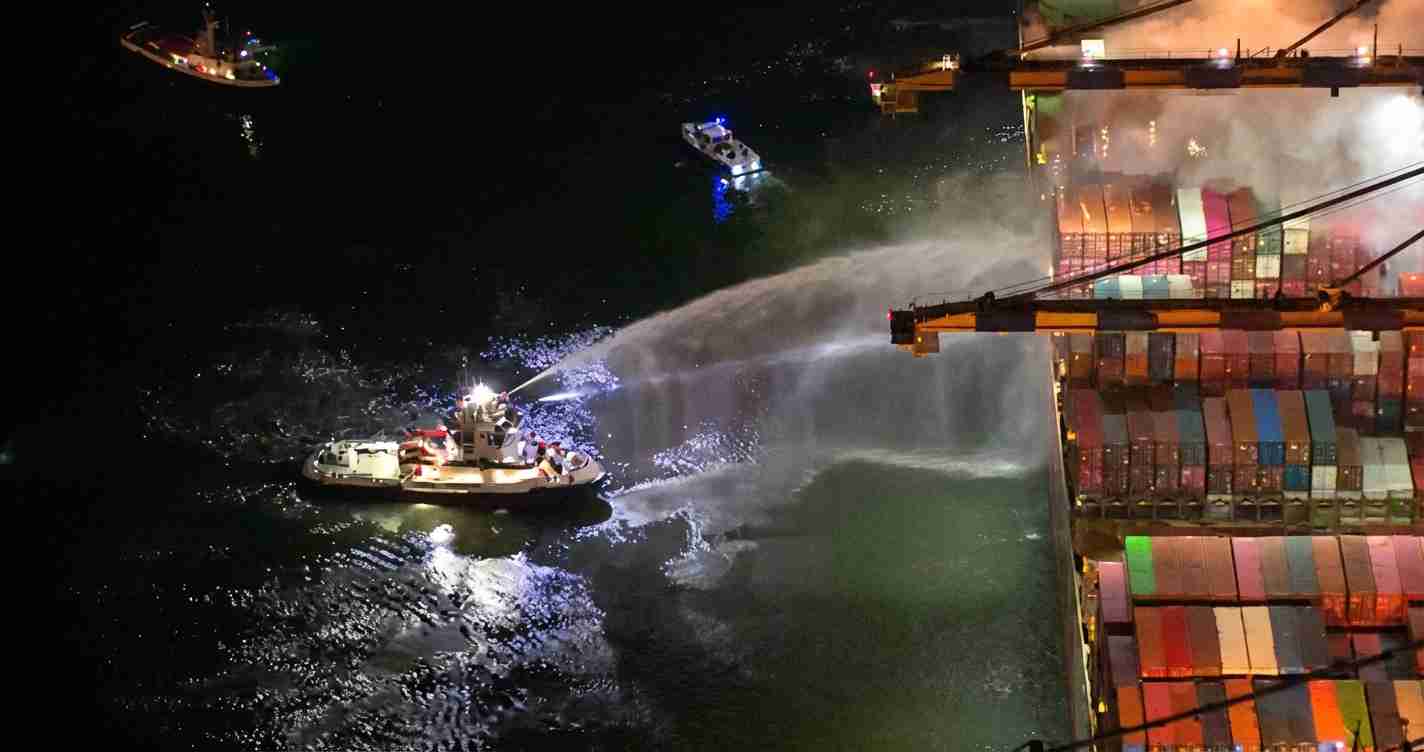
Heavy blaze aboard One Henry Hudson at Port of Los Angeles forces mass evacuation; hazmat crews monitor air after onboard explosion
A dramatic fire erupted aboard the Panamanian-flagged cargo vessel One Henry Hudson at the Port of Los Angeles on Nov. 21, 2025, triggering a mass evacuation, a mid‑deck explosion and a hazardous‑materials response; all 23 crew were safely evacuated.
Key takeaways
- All 23 crew members evacuated safely with no injuries reported.
- Major emergency response: more than 100 firefighters, multiple fire boats and hazmat teams deployed to the scene (Kesq, ABC News).
- Hazmat & air monitoring: several containers carried hazardous materials and officials are monitoring air quality around the port (Los Angeles Times).
What happened: timeline and immediate actions
Shortly after 6:30 p.m., port staff and crew reported smoke coming from a lower deck. Fire investigators and local reports indicated the blaze likely began as an electrical fire below deck. The initial report of smoke and early response were documented by Kesq and local coverage by the Los Angeles Times.
By about 7 p.m., flames and smoke had moved to multiple levels of the vessel. At 7:58 p.m. crews reported a mid‑deck explosion that cut power to parts of the ship and complicated firefighting efforts — footage captured sudden flashes and parts of the vessel going dark after the blast (video coverage: local scene video).
Evacuation and crew safety
Evacuation began immediately once the fire escalated. Early updates indicated only 15 of the 23 crewmembers were initially accounted for while firefighters confirmed everyone’s status. Rescue teams worked quickly and by about 8:30 p.m. officials confirmed all 23 crew were off the ship with no injuries reported.
Quote: “The crew was evacuated and accounted for; our priority was life safety while hazmat teams monitored conditions,” officials said in early briefings.
Emergency response and tactics
The Port of Los Angeles declared a major emergency as more than 100 firefighters and at least 186 personnel responded, supported by fireboats and specialized hazmat teams. Marine units sprayed water to cool the hull and reduce the risk of structural failure (Los Angeles Times).
Because hazardous cargo was involved and below‑deck conditions were unstable, firefighters were initially restricted from entering lower decks at night. Crews used drones with thermal cameras to locate hot spots and guide where water or foam could be applied safely (Los Angeles Times).
Hazardous materials and air quality monitoring
Port and fire officials confirmed several containers carried hazardous materials. Responders wore protective suits and self‑contained breathing apparatus while managing the scene. Hazmat teams monitored air quality around the port and neighboring communities as a precaution (Kesq, scene video).
Officials emphasized that large volumes of water were used to fight the blaze but the ship’s buoyancy remained stable and there were no immediate signs the vessel would sink. Pier operations and port workers were kept away from active danger zones while responders worked (ABC News).
Leadership and oversight
Los Angeles Mayor Karen Bass and California Governor Gavin Newsom were briefed on the incident; city and state agencies coordinated monitoring of the response. Port officials and federal investigators are expected to join local teams to determine the fire’s full cause and review hazardous‑cargo procedures (Kesq).
Context: why this matters locally and globally
The Port of Los Angeles is the busiest port in North America; a major fire here can disrupt supply chains and affect shipments across the Pacific and into Europe. A prolonged pier closure or terminal slowdown would ripple through global logistics, affecting retailers, manufacturers and insurers (ABC News).
An electrical fire that spread to multiple decks and caused a mid‑deck explosion will likely prompt scrutiny from maritime authorities, flag states and classification societies. Regulators may review inspection records, cargo manifests and declaration/stowage practices for hazardous materials (Kesq, Los Angeles Times).
Eyewitness and video accounts
Local video footage showed crews working on decks and fireboats spraying the hull; some clips captured the mid‑deck explosion and sudden loss of lights aboard the vessel. Reporters on the pier described thick black smoke and a large emergency presence into the evening (video, Los Angeles Times).
Implications for The World
Economic & supply‑chain impact: The incident highlights vulnerabilities in trans‑Pacific trade flows; shipping delays and increased insurance claims are possible if terminal operations are disrupted (ABC News).
Safety & regulatory scrutiny: International maritime authorities, flag states and port regulators may review the vessel’s records and hazardous‑cargo declarations. Operators and terminal managers should expect heightened inspections and possible changes to stowage or declaration practices (Kesq, Los Angeles Times).
Environmental & public-health concerns: Hazmat involvement and smoke can degrade air quality in adjacent neighborhoods; officials will be watched for how air monitoring and marine pollutant controls are handled (Kesq).
Operational lessons for ports worldwide
The use of drones, fireboats and strict hazmat protocols at San Pedro will be studied. Ports globally may reassess cross‑training for marine firefighting, hazmat containment and joint coordination between local, state and federal responders (Los Angeles Times, Kesq).
Practical steps recommended:
- Shipping companies should review electrical systems on similar vessels and verify stowage of hazardous goods.
- Port authorities should confirm rapid notification systems and community air monitoring protocols.
- Local governments should test large‑scale hazmat response plans near busy terminals.
Investigations and next steps
Officials said formal investigations will begin once the fire is suppressed and the scene is safe. Federal maritime investigators and port safety officials are expected to review the cause, cargo manifests and the emergency response. Local leaders will continue to receive updates and coordinate recovery and safety checks (Kesq, Los Angeles Times).
Key information (summary)
- Vessel: One Henry Hudson, Panamanian‑flagged cargo ship built in 2008, recently arrived from Tokyo.
- Time: Fire reported about 6:38 p.m. local time on Nov. 21, 2025; explosion at about 7:58 p.m.
- Crew: 23 people on board; all evacuated safely by about 8:30 p.m.; no injuries reported.
- Response: More than 100 firefighters, multiple fire boats, hazmat teams and drones with thermal imaging used to find hotspots (Kesq, Los Angeles Times, ABC News).
- Hazmat concerns: Several containers carried hazardous materials; air quality being monitored around the port (Kesq, Los Angeles Times).
Sources and reporting
This article draws on reporting and on‑scene video from multiple outlets:
Note: All factual details and source links in this report are preserved from initial coverage and on‑scene reporting to support ongoing verification and follow‑up.


