
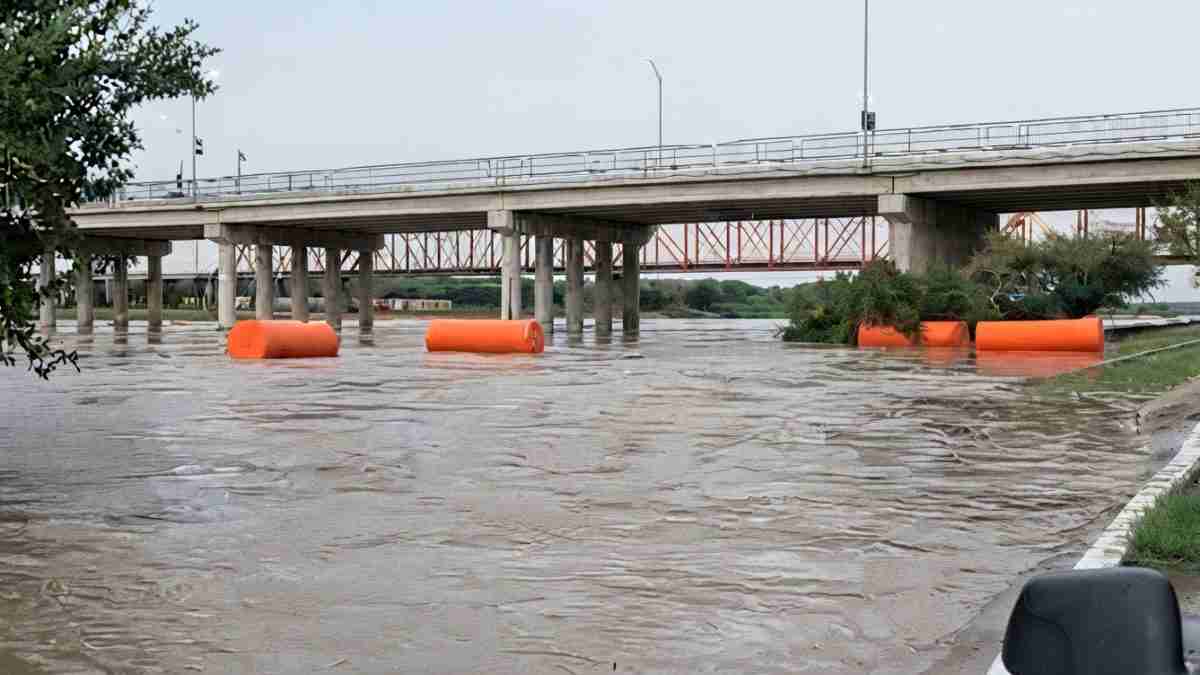
EAGLE PASS, Texas, July 17 (Our Texas Times) — People planning to cross between Eagle Pass and Mexico should check bridge status before leaving. A National Weather Service forecast cited in local reporting said the Rio Grande began rising Thursday and was expected to crest at moderate flood stage Friday night, with one report putting the crest around 7 p.m.
The same flooding sent more than 100 federal border-security buoys loose in the river Thursday, and the drifting barriers floated toward Eagle Pass. City officials temporarily closed two international bridges for about three hours while they checked whether the buoys posed a threat. The bridges reopened just after midnight Friday.
What happened?
Eagle Pass city manager Homero Balderas said officials shut down traffic at the bridges as a precaution while they assessed the situation. He said the buoys did not immediately endanger the bridges.
Balderas also said the crossings matter a lot to the city. In reporting on the closures, he said the bridges are Eagle Pass’ number one funding source.
Why were the buoys in the river?
U.S. Customs and Border Protection said a government contractor was responsible for the buoys that had been staged at Shelby Park in Eagle Pass and was working with the agency to retrieve them. A CBP spokesperson said the buoys were not ready to be deployed or anchored in the river.
CBP has described waterborne barriers as a way to create a safer environment for agents and to deter migrants from crossing through dangerous waterways.
What did the flooding do?
The Rio Grande’s rising water carried the buoy line downstream. Texas Division of Emergency Management and Eagle Pass Police Chief Amy Gonzalez told state Rep. Eddie Morales Jr. that the buoys had been carried from the Quemado area.
Officials said no injuries and no structural damage to the bridges had been reported.
What about other border cities?
Laredo also watched the drifting barriers closely. Local officials activated the city’s emergency operations center and used drones to track the buoys. They warned that one or more bridges could be closed if debris created a danger.
Officials in the region also told residents not to approach or touch the barriers.
Why this matters
Short bridge closures can disrupt cross-border travel and local revenue in border cities. In a flood event, even floating debris that is not immediately dangerous can force officials to pause traffic until they know the route is safe.
For now, the main thing for travelers is simple: check local bridge alerts before heading to the border, and avoid the water if debris is moving downstream.

