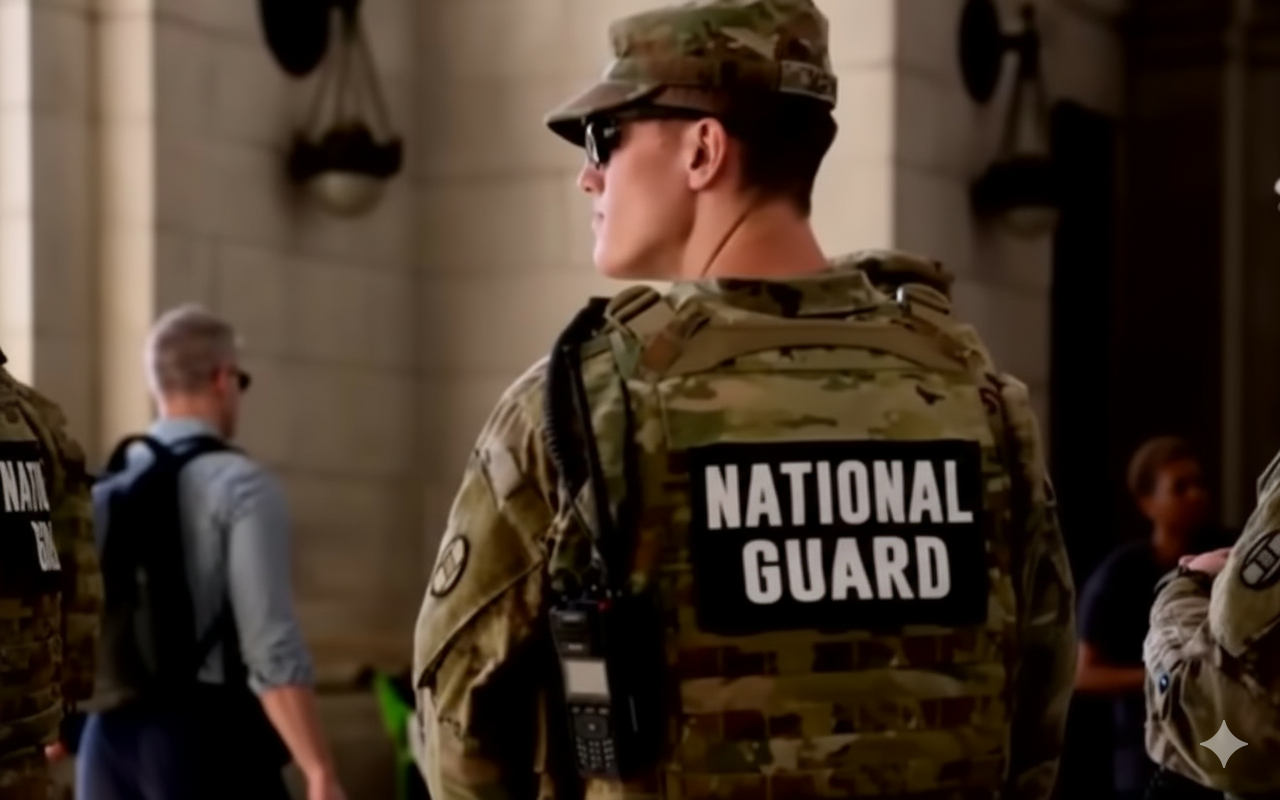
Texas National Guard Deploys 200 Troops to Illinois in 60-Day Federal Protection Mission as Chicago Leaders Call Move Illegal
Two hundred Texas National Guard troops were mobilized to Illinois on a 60-day federal protection mission to secure federal personnel and property amid anti-immigration protests near an ICE facility outside Chicago, sparking legal and political challenges.
- 200 Texas National Guard troops deployed under a Pentagon-confirmed Federal Protection Mission to secure federal sites amid protests (see Fox News, Military Times, CBS Chicago).
- City and state leaders — including Chicago Mayor Brandon Johnson and Illinois Gov. JB Pritzker — condemned the move and pursued legal challenges (see Fox News, Military Times).
- Troops staged at an Army Reserve center in Elwood and set up temporary quarters while courts weigh challenges; a separate deployment to Portland was temporarily blocked by a judge (see Military Times, CBS Chicago).
Federal protection mission: scope and Pentagon confirmation
The Pentagon confirmed the operation as a Federal Protection Mission to secure federal functions, personnel and property in the Chicago area during heightened unrest tied to anti-immigration protests. Officials said the troops will support federal law enforcement and protect ICE facilities that have been focal points for demonstrations and clashes (sources: Fox News; CBS Chicago).
Military statements described the role as protective and largely static: guarding sites, backing up federal agents, and helping prevent property damage and assaults on federal staff. The Pentagon framed the move as a response to specific security incidents and threats against federal personnel (Military Times).
Legal and political dispute in Chicago and Illinois
The deployment touched off immediate political pushback. Chicago Mayor Brandon Johnson called the mobilization “illegal, unconstitutional, dangerous and wrong” and moved to limit federal immigration enforcement on city property through executive actions. The mayor’s declaration and legal filings challenge the authority to send an out-of-state Guard when local leaders object (see Fox News).
“Illegal, unconstitutional, dangerous and wrong.” — Chicago Mayor Brandon Johnson
Governor JB Pritzker called the deployment political and warned of poor coordination with state and local authorities, arguing the move risked using the Guard as “political props” and raising sovereignty questions (sources: Military Times; CBS Chicago).
Deployment details and on-the-ground reports
Photos and local reports show Texas National Guard members arriving at the Army Reserve Training Center in Elwood, roughly 55 miles southwest of Chicago, where they established temporary living quarters and began preparing sites. Media reported visible troop movements and staging at the site (see Military Times, CBS Chicago, and YouTube).
Defense Department orders indicate tasks will include training and participation in the protection of ICE facilities and other federal sites. Illinois National Guard units were readied under federal orders for possible civil-disturbance response and protective-equipment training, though as of the latest reports Illinois troops had not been fully committed to active operations (see CBS Chicago).
Federal and state leaders’ reactions
Texas Governor Greg Abbott praised the deployment as support for federal enforcement and hailed the troops for “putting America first,” while federal officials framed the mission as necessary to protect federal employees amid escalating demonstrations (see Fox News).
City and state leaders expressed concern about justification and legal basis for sending another state’s Guard into Illinois, and civil-rights groups warned of a chilling effect on lawful protest (sources: Military Times, CBS Chicago).
A military perspective: novelty, not necessarily a legal violation
Retired Maj. Gen. Richard Hayes of the Illinois National Guard described the deployment as novel, noting he had not seen a different state’s Guard federalized and sent interstate for such a mission in his experience. He said the move raised questions but was not necessarily illegal under federal mobilization authorities (see CBS Chicago).
Court actions and the path forward
Legal challenges are proceeding. A federal judge in Chicago declined to immediately stop the deployment but scheduled further hearings to consider claims about state sovereignty and authority. A separate federal judge temporarily blocked a similar mission to Portland, highlighting unsettled legal precedent around interstate Guard missions under federal control (see CBS Chicago).
Implications for the world
Observers note several international and structural implications:
- U.S. civil-military boundaries: Deploying out-of-state National Guard forces under federal orders for domestic protest response raises questions abroad about balancing civil liberties and security.
- Rule-of-law and precedent: Court rulings could set significant precedent for federal authority to mobilize Guard forces across state lines.
- Migration politics: The operation is tied to anti-immigration protests and may be read as an escalation in federal responses to demonstrations over immigration enforcement.
- Local governance: The dispute highlights tensions between municipal autonomy and federal action, offering a model other cities will watch.
Status and next steps
The mission remains fluid. Troops are in place under federal orders while courts in Chicago review constitutional and statutory claims. Officials in Washington, Texas, Illinois and Chicago continue to clash over the National Guard’s role in domestic protest response (sources: Fox News, Military Times, CBS Chicago).
Photos, local reporting and video footage documented arrivals and staging at the Elwood Army Reserve Training Center and temporary quarters being set up by Texas Guard members (see Military Times, CBS Chicago, YouTube).