Athletics break ground on $2 billion “armadillo” stadium, declaring: “We are Vegas’ team”
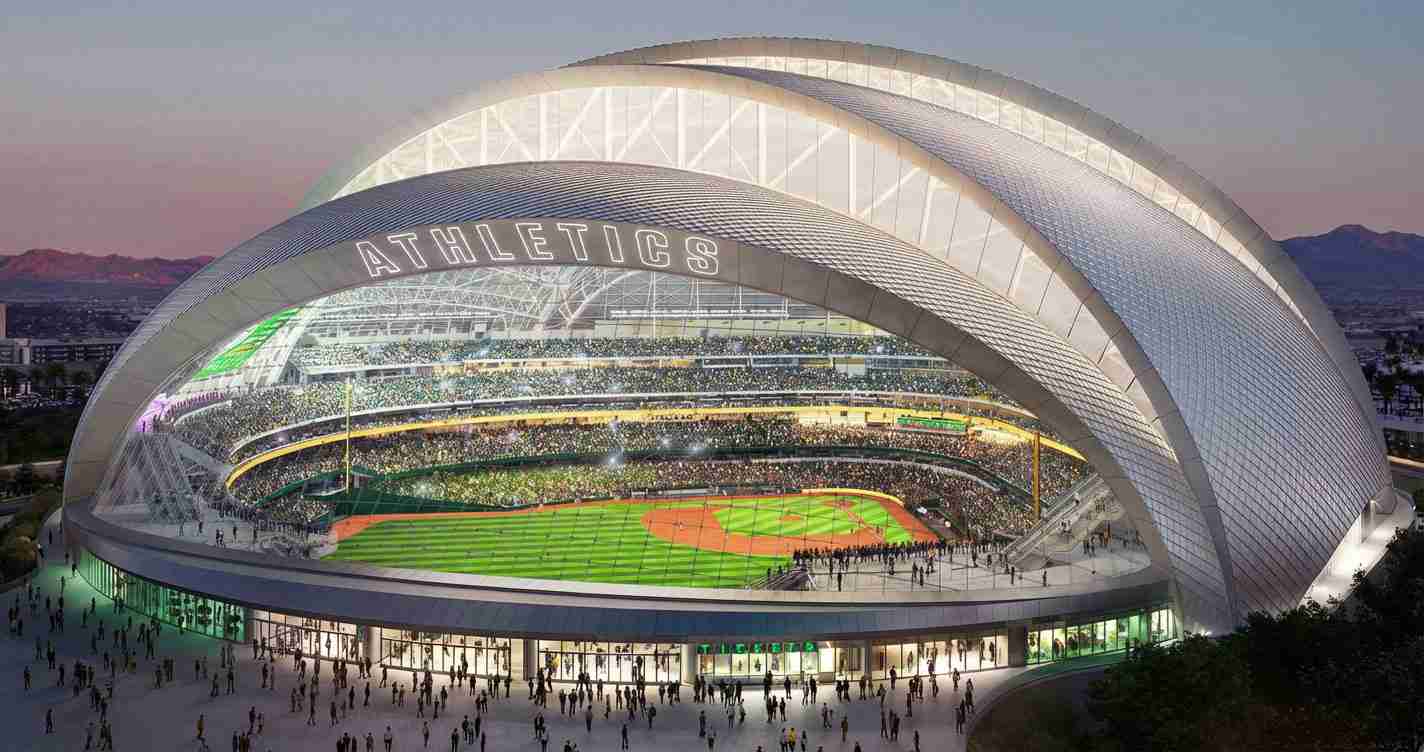
On June 23, 2025 the Athletics broke ground on a $2 billion, 33,000‑seat Las Vegas stadium — a five‑arched “armadillo” design by BIG and HNTB — marking the relocation and a planned 2028 opening for fans and visitors.
- Groundbreaking: Ceremony held June 23, 2025; owner John Fisher declared, “We are Vegas’ team.” (ESPN)
- Project: Estimated construction cost moved from $1.75 billion to about $2 billion; capacity 33,000 seats. (ESPN, Wikipedia)
- Design & site: Nine‑acre footprint at Tropicana & Las Vegas Blvd on a 35‑acre Bally’s parcel; design by BIG with HNTB — the iconic “armadillo” form. (Dezeen)
Groundbreaking ceremony — “We are Vegas’ team”
Owner John Fisher stood on the dugout‑level mound of dirt at the Tropicana site with construction vehicles in the background and proclaimed, “We are Vegas’ team.” The crowd included MLB commissioner Rob Manfred, state and local officials, former Athletics greats Rollie Fingers and Dave Stewart, and youth players. The event blended celebration and a clear message that the relocation from Oakland is advancing from plan to reality. (ESPN)
Design and site — a stadium shaped like an “armadillo”
The ballpark will occupy a nine‑acre footprint at Tropicana Avenue and Las Vegas Boulevard, within a 35‑acre parcel owned by Bally’s. The architecture, led by Danish firm BIG with U.S. partner HNTB, features five overlapping arched volumes meant to recall an armadillo, with a metal‑clad exterior and a prominent cable‑net glass main entrance intended as a visual landmark. Designers aim for an iconic silhouette that reads as both civic architecture and entertainment destination. (Dezeen)
Construction progress and timeline
Project managers reported rapid early movement: outfield decks and concourses saw the first concrete pours days after groundbreaking. By midweek updates roughly half of the ballpark decks had been poured and 84% of seating is planned between the foul poles to create an intimate bowl. Steel erection for the bowl was scheduled to begin in March, buttress completion and roof steel through spring and summer, and the main frame visible by summer and early autumn — all aiming toward a 2028 opening. These phasing details were provided by on‑site construction officials. (ESPN)
Cost changes and schedule risks
Originally announced at about $1.75 billion, the project’s construction budget has since been estimated closer to $2 billion in owner statements and public filings. While the Athletics and partners retain the 2028 target, rising material costs and typical large‑project risks could pressure the schedule or scope. Major permits and the stadium lease were finalized in the prior year, allowing work to proceed. (ESPN, Wikipedia)
Funding, approvals and public money
Nevada and Clark County approved up to $380 million in public funding for the project. The Las Vegas Stadium Authority approved lease and development documents in December 2024, which officials described as clearing the major regulatory hurdles to relocation. Local leaders present the investment as a bet on jobs, tourism and long‑term economic activity; critics question public subsidies and long‑term returns. (ESPN)
Temporary home, team branding and community ties
After concluding their final Oakland season in 2024, the Athletics will play at a Triple‑A ballpark in West Sacramento for at least three seasons while construction proceeds. As part of the transition, each A’s uniform will carry a patch blending Sacramento’s Tower Bridge with a Las Vegas logo, reflecting a three‑year sponsorship with the Las Vegas Convention and Visitors Authority. Team officials say the arrangement keeps players and staff in competitive play while the new ballpark rises. (ESPN)
Las Vegas sports landscape and wider implications
The Athletics will become Las Vegas’ fourth major professional team — joining the Raiders, Golden Knights and Aces — and developers expect the stadium to energize the Tropicana corridor with construction jobs and increased visitor traffic. The compact 33,000‑seat design aims for a dense, lively atmosphere mixing tourism audiences with local fans. Observers worldwide will watch financing, permitting and community outcomes as lessons for future venue projects. (ESPN, Wikipedia, Dezeen)
Design, tourism and cultural branding
The armadillo form is being pitched as an architectural attraction in a city built on spectacle. Cladding, lighting and the glass entrance are designed for strong night‑time presence and civic programming, signaling a push to make the ballpark both a local home and a year‑round destination for visitors interested in architecture and events. (Dezeen)
Global implications — economics, markets and architecture
Large stadium projects ripple beyond local skylines: international contractors, material suppliers and design firms join builds of this scale, affecting supply chains and pricing. The shift from $1.75 billion to roughly $2 billion underlines how inflation and global commodity prices matter for major projects. For sports markets, the move underscores franchise mobility toward tourism hubs and the role of new‑venue economics in franchise decisions. European planners and investors will likely study Las Vegas’ mix of public and private funding, approvals, and community negotiations as a case study. (ESPN, Wikipedia, Dezeen)