
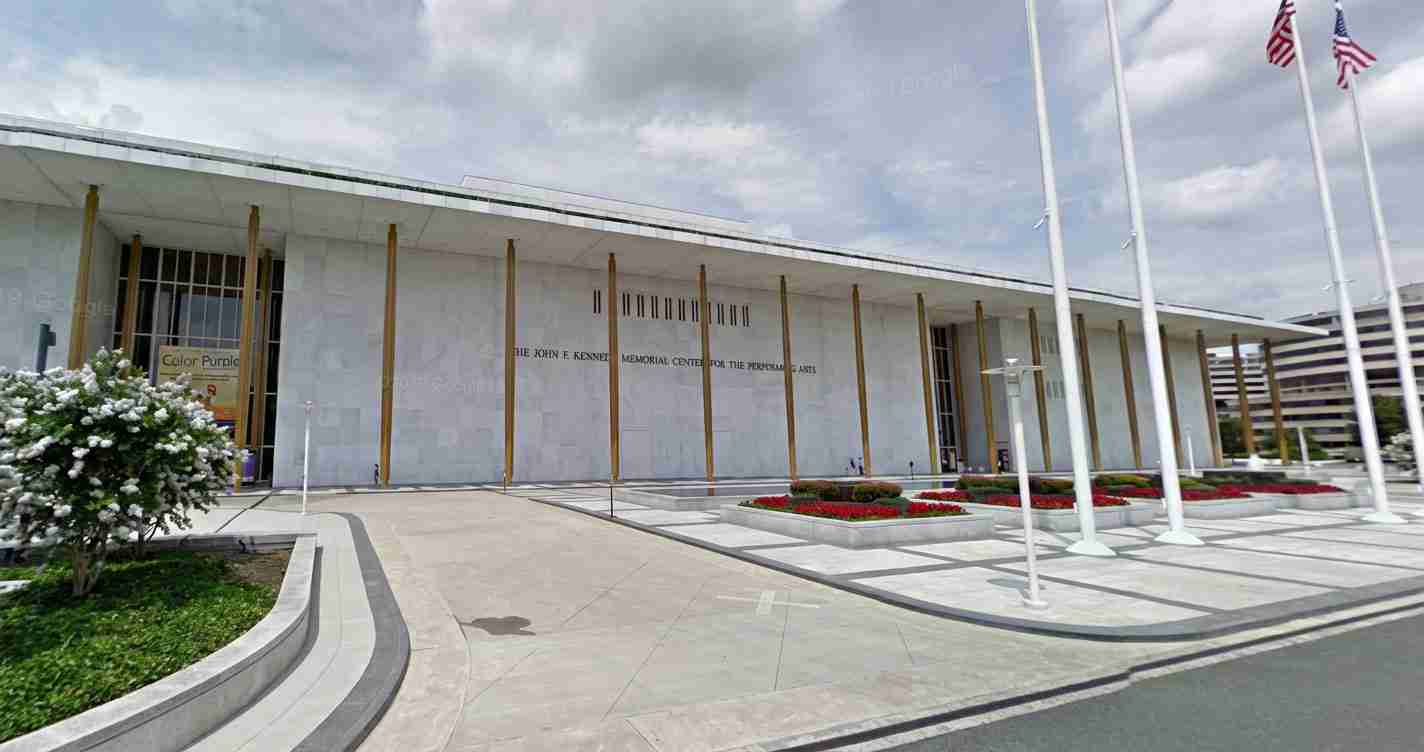
Federal judge orders Trump name removed from Kennedy Center and blocks planned two‑year shutdown
A federal judge in Washington, D.C., ordered the immediate removal of Donald Trump’s name from the John F. Kennedy Center and blocked a planned two‑year closure and renovation, saying the Board exceeded its statutory authority.
Key takeaways
- Judge Christopher R. Cooper ruled the Kennedy Center Board exceeded its authority by renaming and branding the Center with Donald Trump’s name, and issued an order removing that branding.
- The court enjoined a planned two‑year closure for renovation tied to the contested rebrand; the ruling does not rescind congressional funding but limits implementation under the statute.
- Rep. Joyce Beatty sued, arguing board governance changes in 2025 unlawfully paved the way for renaming and closure; an appeal to the D.C. Circuit is expected.
Key facts
U.S. District Judge Christopher R. Cooper issued a lengthy opinion finding the Kennedy Center Board exceeded its statutory authority by renaming the site and branding it with former President Donald Trump’s name. Sources reporting the ruling include Axios and the Los Angeles Times.
The court ordered removal of Trump’s name from exterior signage and official materials and halted the planned two‑year closure for renovation; the decision is contained in a reported 94‑page opinion by Judge Cooper (Axios, Los Angeles Times).
The suit was filed by Rep. Joyce Beatty (D‑Ohio), an ex officio board member, who argued the renaming and closure were unlawful and that bylaw changes undermined voting rights on the board (Axios, Los Angeles Times).
Background: why the name mattered
Congress renamed the original National Cultural Center as the John F. Kennedy Center for the Performing Arts in 1964. Judge Cooper’s opinion emphasized statutory text and history to conclude the institution’s name is fixed by Congress and cannot be changed by the Board acting alone. As Cooper wrote,
“Congress gave the Kennedy Center its name, and only Congress can change it.”
The Board and the Trump administration moved to rebrand the venue as part of a sweeping renovation plan. Supporters said the work addressed decades of deferred maintenance; critics said the plan would shutter and gut the national cultural center while serving as a vehicle for personal branding (Axios, Los Angeles Times).
The lawsuit and Judge Cooper’s ruling
Rep. Joyce Beatty filed the complaint in December, asserting that 2025 bylaw changes effectively sidelined some board members and allowed the renaming and closure push to proceed without proper authority. Her amended complaint sought injunctive relief to block the rebranding and the planned shutdown (Los Angeles Times).
Judge Cooper parsed the statute’s text, history and structure, concluding the Board exceeded its authority in creating a “Trump‑Kennedy Center” identity and adopting measures that would close the Center for a two‑year overhaul without Congress’s explicit approval. The decision addresses both naming authority and the proposed closure (Axios, Los Angeles Times).
Earlier, Cooper denied a separate preservation group’s request for a preliminary injunction in a related matter; the Beatty ruling revisited related legal issues in a different posture and reached a broader conclusion about naming authority (Los Angeles Times).
What the order requires and what it blocks
The court ordered removal of physical signage bearing Trump’s name and required references to a “Trump‑Kennedy Center” be stripped from official materials and communications. Reports noted the court gave a short deadline — about two weeks — for removal of exterior signage (Axios, Los Angeles Times).
The ruling also enjoined the administration’s plan for a two‑year shutdown tied to funds Congress appropriated for repairs and capital work. The decision does not rescind the congressional appropriation but constrains how the Board and administration may implement renovation and branding plans under the statute (Axios).
Funding and the restoration plan
Reporting indicates roughly $257 million was secured through Congress for the Kennedy Center’s maintenance, security and capital projects. The appropriation remains in place; the court’s order addresses naming and closure authority, not the underlying funding. How the $257 million will be used must fit the court’s reading of the statute or await further congressional action or appellate rulings (Axios).
Reactions from key players
Donald Trump criticized Judge Cooper and Democrats in a lengthy post on Truth Social, saying he took pride in “taking over a losing Institution” and accused the judge and the “Radical Left” of wanting the Center to “DIE” rather than be transformed (Axios).
Rep. Joyce Beatty praised the ruling, saying it confirms the renaming and closure moves had “no basis in law” and that the Kennedy Center “belongs to the American people, not to Donald Trump” (Axios).
Roma Daravi, described as the Trump Kennedy Center vice president of public relations, said the Board plans to appeal and argued the Center needs urgent restoration, pointing to the $257 million approved by Congress. The Board has said it will review the decision and pursue lawful options (Axios, Los Angeles Times).
The White House did not immediately comment, according to reporting (Axios).
Legal next steps and status
The order is in effect for now, but the Board has signaled it will appeal to the U.S. Court of Appeals for the D.C. Circuit. An appellate court could stay or overturn parts of Cooper’s ruling while the case proceeds; until then, the Kennedy Center must comply with the district court’s removal and operational directives unless a higher court intervenes (Axios, Los Angeles Times).
Related coverage and video
Video reports and clips are available from multiple outlets. See YouTube video 1, YouTube video 2, and YouTube short.
Implications for The World
Cultural symbolism: The Kennedy Center is a high‑profile American memorial. Judge Cooper’s ruling that only Congress may change its name reinforces a legal boundary around national cultural symbols and will be observed internationally as an example of statutory limits on institutional rebranding (Los Angeles Times).
Funding and preservation: The $257 million appropriation remains available. How those funds are used under the court’s reading will affect international tours, cultural exchange programs and performances; extended litigation could delay restoration and disrupt scheduled events (Axios).
Diplomatic optics: The dispute could shape perceptions of U.S. political culture abroad, with partners potentially viewing the court’s decision as a defense of statutory limits on executive and board power (Los Angeles Times).
Rule‑of‑law message: The decision highlights how courts can rein in actions conflicting with federal statutes and may be cited in international debates about managing public memorials and cultural assets (Axios).
Reporting note
This article draws on reporting from Axios and the Los Angeles Times and includes public statements and video coverage (see YouTube video 1, YouTube video 2, YouTube short). Further developments, including appeal filings or stays, are likely and will affect implementation.



