
DOJ urges judge to reject White House UFC fight lawsuit, saying critics can ‘avert their gaze’ — White House UFC Fight Lawsuit pits Trump, Dana White and public‑land rules against plaintiffs seeking UFC South Lawn injunction
A federal lawsuit seeks to block UFC Freedom 250 on the White House South Lawn on June 14, alleging improper use of federal property and conflicts of interest involving the Trump administration and UFC CEO Dana White.
- Emergency bid: The Public Integrity Project asks a federal judge for an immediate injunction to stop the June 14 card.
- DOJ response: The Department of Justice urges Judge Amit P. Mehta to deny relief, citing late timing, standing questions and millions already spent.
- Core claims: Plaintiffs allege improper commercial use of federal parkland, conflicts of interest, and skipped environmental and permitting reviews.
- Stakes: Roughly 4,000 spectators expected; government says more than $60 million committed and fighters are in final preparations.
Main story
What the event is
UFC Freedom 250 is billed as a marquee mixed‑martial‑arts card to be staged on the White House South Lawn on June 14 — timed to coincide with President Trump’s 80th birthday, Flag Day and the unofficial opening of America’s 250th anniversary events. UFC CEO Dana White has worked closely with the White House on the project; see the Time magazine feature on Dana White and the event and a YouTube report for additional context.
South Lawn build‑out and “the claw”
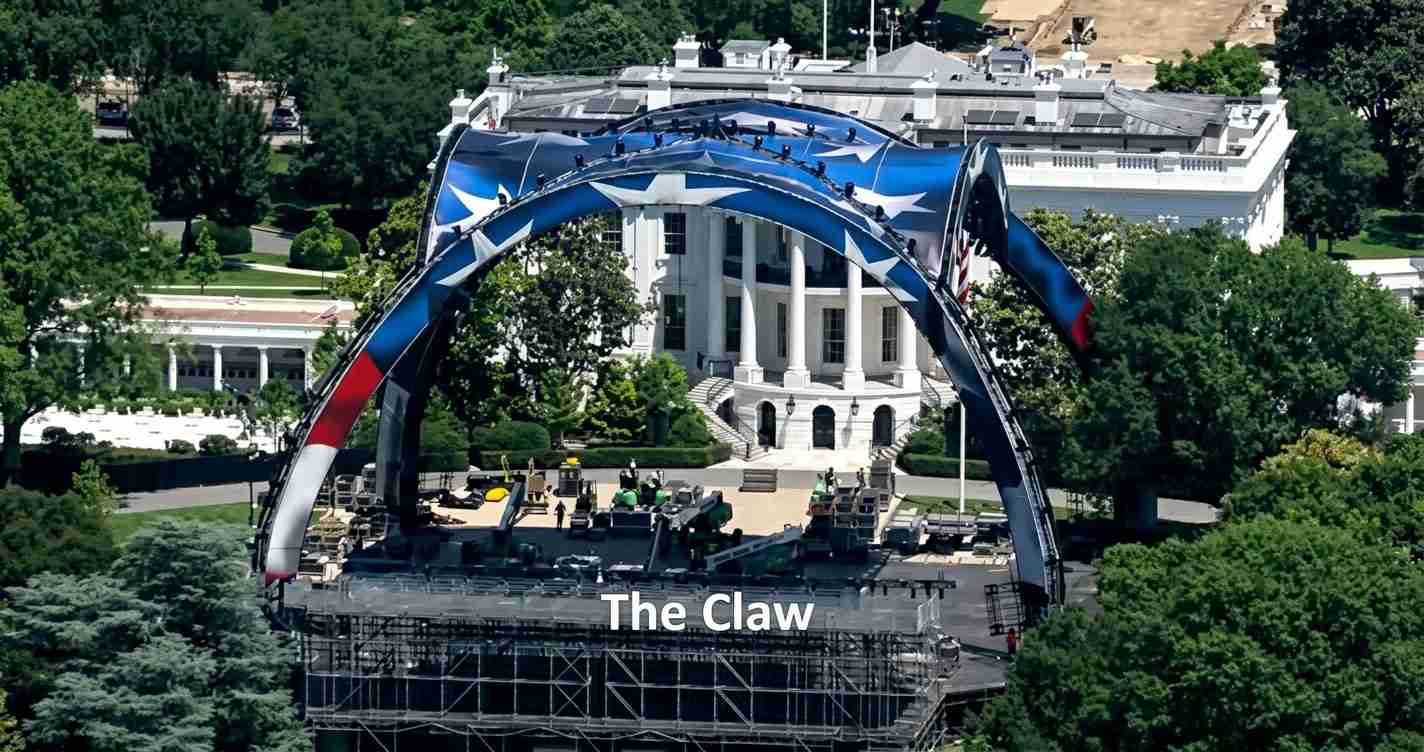
Work on the South Lawn began weeks in advance, including a roughly 90‑foot‑tall steel arch nicknamed “the claw” that forms part of the ring and stage design. Plaintiffs describe the structure as a visual and historic affront to federal parkland and the White House grounds, citing video coverage and reporting (video, analysis).
Who is suing and what they want
The Public Integrity Project filed the complaint on behalf of two Virginia residents naming the National Park Service and the Department of the Interior. Plaintiffs ask a federal court for an immediate injunction, arguing the authorization turned federal parkland into a commercial venue and circumvented rules meant to protect national monuments and public space (complaint reporting, CNN post).
Plaintiffs’ core arguments
- Improper use of federal property and conflicts of interest: The suit calls the event a “fundamentally private commercial corrupt use” of federal property tied to the president’s relationship with Dana White. Plaintiffs allege President Trump purchased about $50,000 in TKO Group Holdings (UFC’s parent) and that the event could yield private financial or reputational gains (report, legal coverage).
- National Park Service rules and sporting‑event limits: Plaintiffs cite NPS regulations limiting certain sporting or commercial events on federal parklands and argue the administration cannot relabel a commercial fight as a patriotic celebration to bypass those rules (coverage).
- Permitting and NEPA: The complaint alleges required permitting and federal environmental review under the National Environmental Policy Act were not completed and that reliance on an America‑250 exemption is improper — plaintiffs contend the 90‑foot structure required congressional approval (video).
- Public‑use and aesthetic impacts: Plaintiffs say the event interferes with public enjoyment of the White House and the National Mall, calling the setup “hideous” and unsuitable for treasured national landscapes.
Trump administration and DOJ response
The Department of Justice filed a forceful opposition to the injunction request. Its principal arguments include:
- Timing: The suit was filed at the eleventh hour while weeks of preparations and large expenditures are already in place; DOJ says courts should not intervene so late (CNN post).
- Standing and harm: DOJ contends the two Virginia residents have no concrete, legally protected injury and that objectors can “avert their gaze” rather than enlist courts to impose subjective preferences on the country (DOJ filing coverage).
- Reliance interests and sunk costs: The government notes more than $60 million reportedly spent, tickets and travel booked, and fighters in final weight cuts; stopping the event now would cause substantial disruption (reporting, analysis).
- Comparison to other events: Officials say the UFC card is similar to other permitted South Lawn or National Mall events and falls within customary discretion over White House grounds.
Legal posture and next steps
The case is before U.S. District Judge Amit P. Mehta in Washington, D.C. To secure emergency relief, plaintiffs must show likelihood of success on the merits, irreparable harm, a favorable balance of equities, and that an injunction is in the public interest. Analysts note the late timing and deference typically afforded to executive control of the White House grounds make the plaintiffs’ path challenging. Plaintiffs must file a final brief by 9 p.m. Wednesday; the judge will then decide whether to grant emergency relief (coverage).
Broader context: UFC, Trump and America’s 250th
The fight is intended as a patriotic spectacle and an unofficial opening to America’s 250th anniversary events. Dana White has described the card as symbolic and globally reaching; Time reported UFC expected to lose money but valued exposure (Time feature). Critics counter that staging a commercial sporting event at the White House raises ethics and fairness concerns, especially amid alleged private business ties to the president.
Media coverage and public reaction
News outlets have framed the lawsuit as a last‑minute legal gambit. Coverage highlights both the Public Integrity Project’s ethics concerns and DOJ’s argument that courts should not cancel a heavily prepared national event. Legal commentators on cable news generally assess the chance of a successful emergency injunction as low (CNN post, video analysis).
Implications for The World
Economic impact
Large, visible events at the White House shape international perceptions. If the fight proceeds, tourism and broadcast partners may see short‑term commercial gains. If blocked, suppliers and participants could face financial losses tied to the more than $60 million the government cites (report).
Political consequences
For European moderates and global audiences, the case raises questions about separation between public office and private business ties. A ruling favoring plaintiffs could strengthen legal checks on executive use of public space; a denial would reinforce wide executive discretion (analysis).
Social effects
The spectacle of a UFC card at the presidential residence may deepen domestic divisions and shape international views of American political style; the optics of a commercial fight on historic grounds may jar traditional norms for state property and ceremony (Time report).
Cultural relevance
The event blends popular sport, celebrity and politics in a way uncommon for state sites; that hybrid could influence how other countries consider using historic government spaces for mass entertainment or private partnerships (video).
Practical applications and rule‑of‑law concerns
The case tests NEPA and National Park Service rules. A successful challenge could prompt clearer permitting, environmental review, and congressional approval requirements for major structures on federal grounds—precedents relevant worldwide (coverage, analysis).
Source links for further reading and verification
- CNN Facebook post on DOJ filing
- CNN Facebook post on the lawsuit
- YouTube: reporting and legal analysis (clip 1)
- YouTube: reporting and legal analysis (clip 2)
- YouTube: reporting and legal analysis (clip 3)
- Time magazine feature on Dana White and the event
- Instagram post referenced in reporting
- Regional/local news item (KTSM)
- Regional/local news item (FOX4KC)
“Objectors can simply avoid the event,” DOJ wrote, arguing critics can “avert their gaze” rather than seek to enlist the power of a federal court to impose their idiosyncratic preferences on the rest of the country.



