
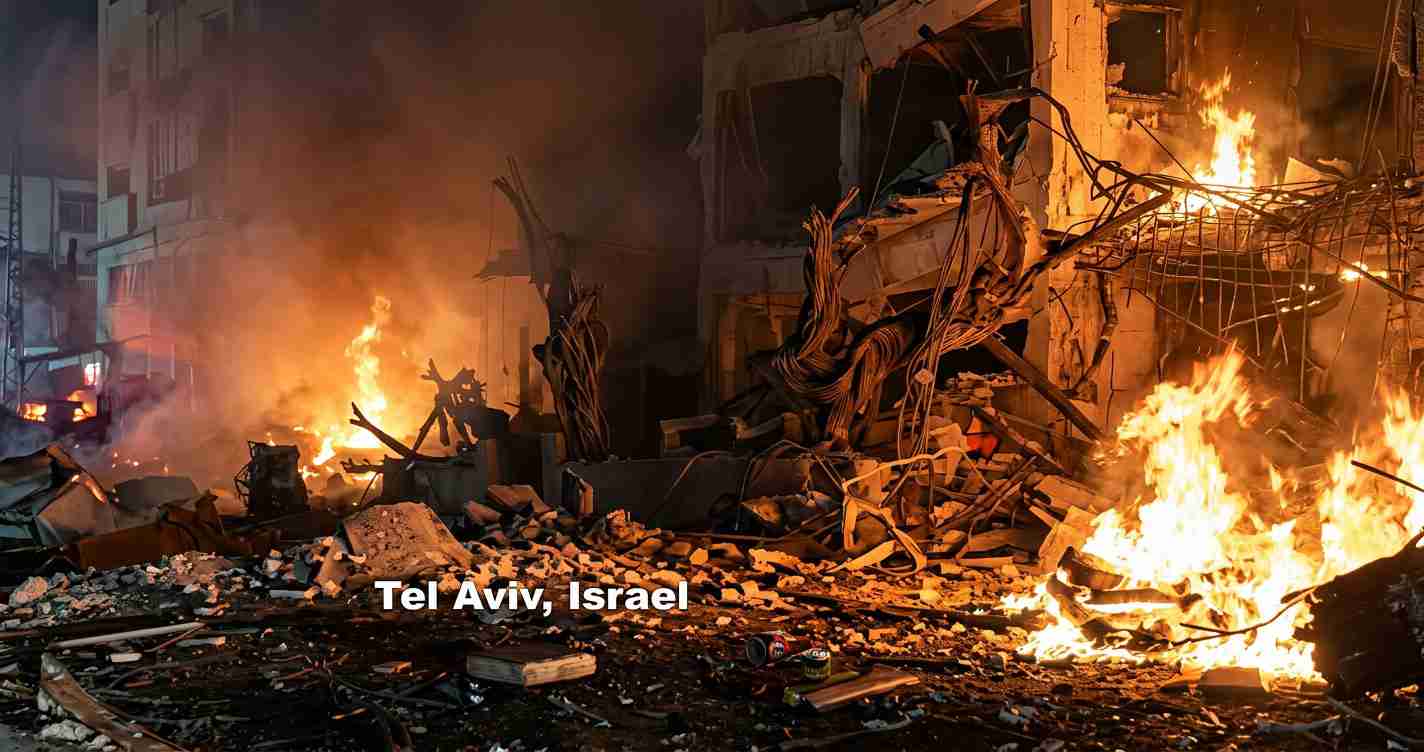
Iran, Hezbollah Launch Synchronized Barrages; Iran Uses Cluster Munitions in Major Escalation
Lede: In early March 2026, Iran and Hezbollah launched near-simultaneous missile and rocket barrages into Israel from Iran and southern Lebanon, including Iranian missiles fitted with cluster‑bomb warheads, injuring civilians and marking a major escalation amid U.S.–Israeli operations.
Key takeaways
- Near‑simultaneous barrages: Strikes from Iran and southern Lebanon occurred in the same operational window on March 5–7, 2026, described by some analysts as coordinated.
- Cluster munitions used: Israel confirmed at least one Iranian missile carried a cluster‑bomb warhead, complicating air defenses and raising civilian risk.
- Uncertain command links: Some intelligence reporting found no clear proof of direct Tehran‑Hezbollah operational coordination despite timing overlap.
- Broader context: Attacks took place on day 11 of joint U.S.–Israeli Operations Epic Fury and Roaring Lion targeting Iranian military capacity.
Main coverage
Key information and sourcing
Multiple sources reported near‑simultaneous strikes from Iran and southern Lebanon on March 5–7, 2026, described by some analysts as coordinated — see video interview, regional analysis and Israeli reporting.
Israel confirmed that at least one missile from Iran carried a cluster‑bomb warhead — see Times of Israel live coverage. Other reporting noted there were no clear indications of direct operational coordination even though attacks overlapped in time — see coverage noting uncertainty.
Coordinated strike strategy: what officials and analysts say
Kobi Michael, a senior researcher at the Institute for National Security Studies and the Misgav Institute, said from his bomb shelter near Tel Aviv that Hezbollah has “fully joined the war.” He described launches from the north and from Iran occurring within the same operational window and said citizens in Haifa and Tel Aviv were spending much of their time in shelter rooms — see the video interview.
Independent analysts and regional media framed the near‑simultaneous barrages as a strategic message: the conflict may be evolving into a coordinated regional confrontation — see regional analysis and Israeli reporting.
But intelligence reporting is not unanimous. Israel’s Channel 13, cited in international coverage, reported there were “no clear indications of direct coordination” between Tehran and Hezbollah — while acknowledging missiles from Iran and rockets from Lebanon struck in the same time frame — see report noting lack of clear coordination.
Cluster munitions and the air‑defense challenge
Israel confirmed Iranian missiles included cluster‑bomb warheads. Such warheads burst at altitude and scatter dozens of submunitions across wide areas, creating numerous small targets that are harder for air‑defense systems to defeat and that pose significant civilian hazards — see Times of Israel live coverage.
Cluster munitions are banned under the 2008 Convention on Cluster Munitions by more than 120 countries because bomblets can fail to detonate and later injure civilians, and because they have wide‑area, indiscriminate effects. Security analyst Kobi Michael called the Iranian use of cluster munitions “a non‑conventional challenge” requiring an appropriate U.S.–Israeli response — see video interview.
Field reporting noted that even with robust missile defenses, cluster warheads complicate interception because many submunitions can appear as multiple bright signatures at night and are difficult to defeat once released.
Hezbollah’s tactics and battlefield posture
Sources familiar with Hezbollah’s military activities described a return to small‑unit guerrilla methods in southern Lebanon: operating in small cells, avoiding routine electronic communications vulnerable to interception, and rationing anti‑tank weapons while engaging Israeli forces — see video interview.
By early March, Hezbollah significantly increased rocket fire into northern Israel, launching dozens of projectiles in several waves. The IDF said it had struck Hezbollah infrastructure in Beirut’s southern suburbs, including Dahiyeh, after issuing evacuation warnings for that area — see live coverage.
Operations Epic Fury and Roaring Lion: the wider military context
The coordinated strikes occurred during day 11 of the joint U.S.–Israeli campaign named Operations Epic Fury and Roaring Lion. Israeli strikes reportedly targeted regime command centers, missile systems and IRGC compounds inside Iran, and — according to Israeli statements — also hit oil infrastructure and missile production sites, including Shahrud — see video interview and additional live coverage.
Civilian impact and life under sirens
The coordinated barrages caused at least two reported civilian injuries in central Israel from shrapnel and blast effects, though many incoming projectiles were intercepted or fell in open areas — see field reporting.
Residents in northern cities and Tel Aviv described continuous emergency routines: extended time in shelters, repeated air‑raid sirens and disrupted daily life. As Kobi Michael noted, Israel—being a small country—cannot continuously absorb asymmetric attrition without strategic cost.
Intelligence assessments and strategic signals
Analysts say near‑simultaneous launches from multiple points can deliberately attempt to overwhelm air defenses and signal joint capabilities that persist under pressure. That signal has regional importance, suggesting operational reach and resilience even as Tehran faces sustained strikes on its territory — see regional analysis.
At the same time, competing intelligence reports and cautious public Israeli statements highlight limits on what can be publicly confirmed about direct Tehran‑Hezbollah command‑and‑control links — see coverage noting uncertainty.
Implications for The World
Economic impact: A wider regional fight could push energy prices higher and affect global markets. Attacks on Iranian infrastructure and continued missile strikes raise risks of disruptions to Gulf and Mediterranean shipping, with knock‑on effects for supply chains and fuel costs.
Political consequences: European governments face pressure to respond diplomatically and reassess security support in the eastern Mediterranean. NATO members and EU states must balance support for Israel’s right to self‑defense with calls to protect civilians and avoid escalation. The U.S. role in Operations Epic Fury and Roaring Lion makes Washington central to any diplomatic or military turn.
Social effects: A sustained regional campaign could drive new waves of displacement in Lebanon, Israel and nearby countries, increasing humanitarian needs and demand for international aid.
Cultural and normative relevance: The reported use of cluster munitions tests norms against indiscriminate weapons and may prompt European publics to press governments for stronger humanitarian protections and diplomatic solutions.
Practical implications: Travelers and businesses should monitor travel advisories. Energy firms and commodity traders will likely price in higher risk premiums. International aid agencies and NGOs should prepare for surge needs. Diplomatic channels in capitals from Brussels to Berlin will be under strain to respond rapidly.
Sources and reporting notes
This article draws on interviews and reporting by security analysts and media outlets, including video interviews and live coverage, regional analysis at EJ Magnier, Israeli reporting at The Jerusalem Post, Times of Israel live updates at Times of Israel, and reporting noting uncertainty about direct operational ties at Asharq Al‑Awsat.
Additional contemporaneous coverage referenced statements from news organizations and field correspondents; all original URLs and sources are preserved in text and links above.



