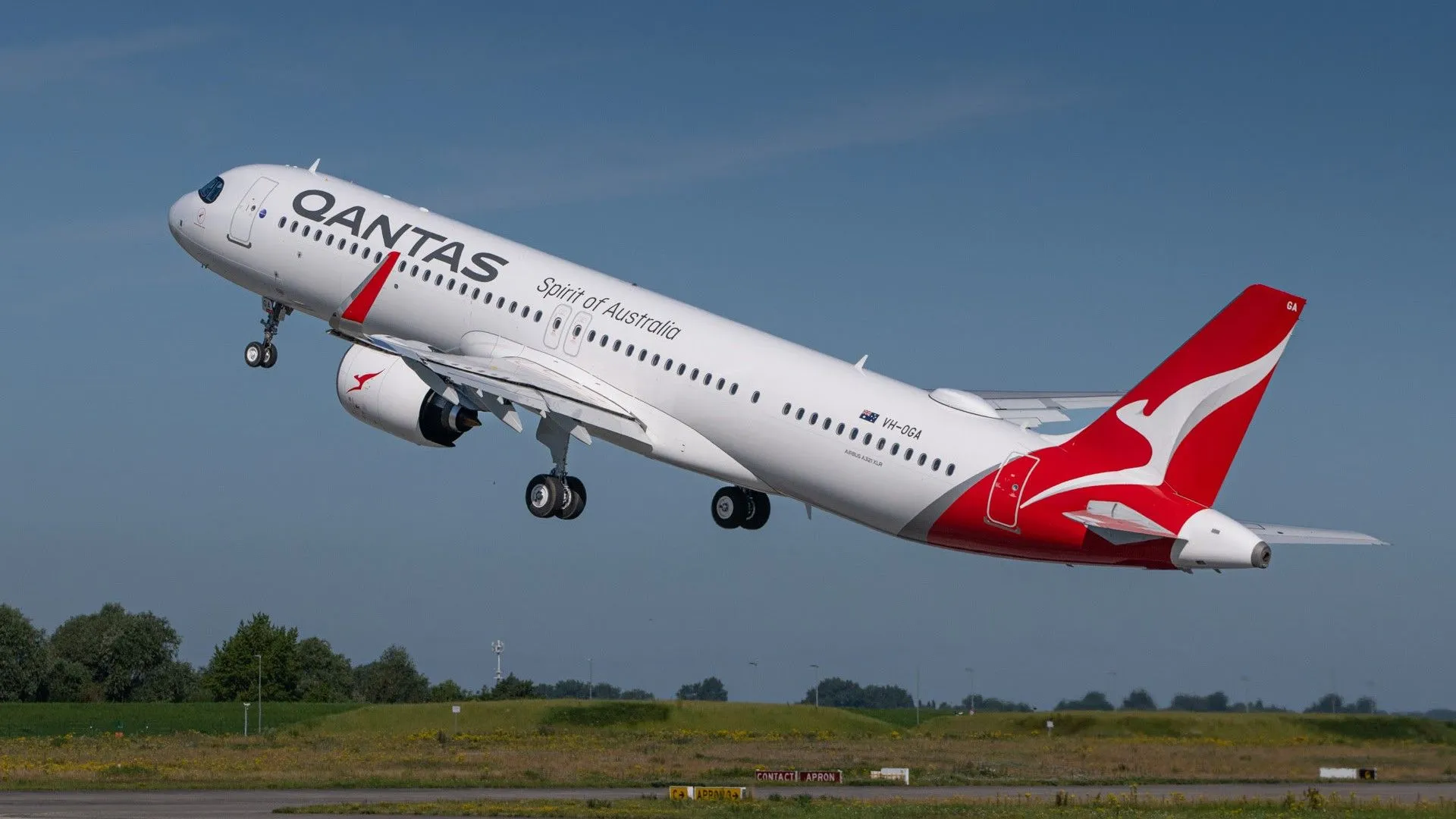
TOULOUSE, France, June 18 (Nationwide Times) — Qantas Airways is betting that a smarter cabin can make 20-hour flying feel more manageable. The airline says its first Project Sunrise route — a nonstop Sydney-London service — is planned for October 2027, with tickets expected to go on sale in February. A later nonstop Sydney-New York flight is also part of the program.
The idea behind Project Sunrise is simple: remove the stopover. Qantas says the Sydney-London trip now takes about 24 to 25 hours with a connection in Singapore, and that a nonstop flight would turn it into a single hop. The airline plans to use Airbus A350-1000ULR jets, a long-range version of Airbus’s A350-1000 built for ultra-long-haul flying.
Why does light matter so much on a flight?
Qantas is not just trying to add comfort. It is trying to work with the body’s internal clock. That clock, called the circadian rhythm, helps control when people feel sleepy, alert, hungry and ready for rest.
On a flight that crosses seven to nine time zones for London — or 14 to 16 for New York — the body clock can get badly out of sync. University of Sydney sleep professor Peter Cistulli described that as a “major biological challenge.”
That is why Qantas has spent years studying sleep, light and movement for Project Sunrise. The airline says its research has looked at nutrition, ergonomics, movement, hydration, exercise and meal timing, not just seat comfort.
What will be different onboard?
Qantas says the cabins will include a “Wellbeing Zone,” extra legroom, specially timed meals and animated or customized lighting. The airline says the lighting will change during the flight to help passengers adjust toward the time zone at their destination before they land.
In first class, Qantas says its six enclosed First Suites will have fully customizable lighting, so customers can choose the time zone they want to follow for the flight. The airline also says it tested lighting options for more than 150 hours, working through hundreds of patterns and sequences at an Airbus facility in Hamburg, Germany, with the University of Sydney’s Charles Perkins Centre and Caon Design Office.
Qantas says the lighting research was designed to match circadian rhythms. In practical terms, that means trying to keep passengers awake when they should be awake and giving them a better chance to sleep when the cabin is set for rest.
One research focus was what the airline and its researchers called a “protective sleep window” — a stretch of flight time shaped by light and meal timing that, according to Professor Cistulli’s account of the tests, improved alertness compared with a more traditional service.
What is Qantas trying to sell?
Qantas is also trying to turn time saved into a premium product. Chief executive Vanessa Hudson said the airline wants to charge more for the nonstop service, with Reuters reporting that Qantas hopes to get about a 20% premium across all four cabins, similar to the price gap between Perth-London nonstop flights and one-stop alternatives.
For travelers, that suggests Project Sunrise is being built less as a budget option and more as a time-saver for people who want to skip a stop and arrive with less jet lag. Qantas says the project is meant to turn Australia’s distance from major hubs into an advantage, not a drawback.
The wider takeaway is that ultra-long-haul travel is becoming a design problem as much as an engineering one. For Qantas, the challenge is not only whether the plane can make the trip. It is whether passengers can land feeling ready to function when they get there.