Without the U.S. Department of Education
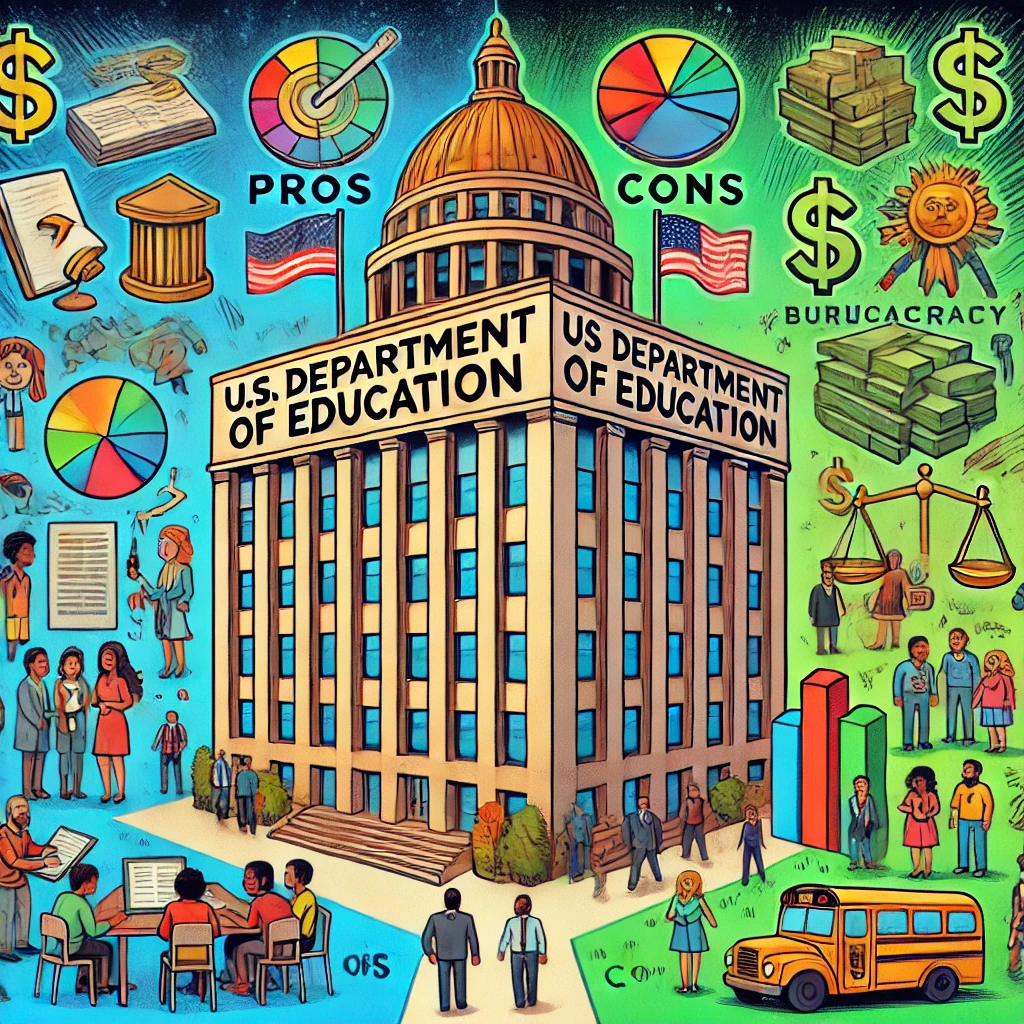
 WASHINGTON, DC (Times Media Service) – The U.S. Department of Education (DOE), established in 1979, has been a subject of national debate for decades. While some see it as essential for guaranteeing equal educational access, others view it as an example of federal overreach that stifles local autonomy. To envision an education system without the DOE, it’s necessary to examine its origins, the constitutional debates it sparks, and the potential consequences of its removal.
The DOE’s History and Role
The DOE was elevated to a Cabinet-level department during President Jimmy Carter’s administration, but its origins date back to 1867 when a small Office of Education was formed to collect school data. Over time, the federal role in education expanded significantly.
By the mid-20th century, landmark initiatives such as the Elementary and Secondary Education Act (ESEA) of 1965 channeled federal funds into schools, especially in disadvantaged communities. The DOE’s creation formalized the federal government’s responsibility for ensuring educational equity, enforcing civil rights, and maintaining national educational standards.
Arguments for Local Control
Critics of the DOE argue that education should be governed by states and localities, which better understand their unique populations’ needs. Without the DOE, states would gain full control over curriculum standards, teacher qualifications, and school funding. This approach could foster innovation and reduce bureaucratic hurdles, proponents say.
For instance, states could craft curricula reflecting regional needs, such as prioritizing STEM education in tech hubs or agricultural studies in rural areas. Schools might also gain more flexibility in hiring and resource allocation.
Challenges of Dismantling the DOE
Abolishing the DOE would require congressional approval and a president willing to prioritize the effort. The process would likely involve repealing the Department of Education Organization Act of 1979 and redistributing its functions to other entities.
President Ronald Reagan championed the idea of eliminating the DOE, citing a preference for smaller government and local autonomy. However, his attempts were thwarted by resistance in Congress, including from his own party. Reagan’s struggle highlighted the significant political and institutional barriers to dismantling a federal agency.
Constitutional Questions
Opponents of the DOE argue that education is not mentioned in the U.S. Constitution and should therefore fall under state jurisdiction per the Tenth Amendment. However, supporters counter that federal involvement is justified under the Fourteenth Amendment’s Equal Protection Clause, which ensures equitable access to education for all students.
This constitutional tug-of-war underscores the broader conflict between federal oversight and state control in addressing disparities that states alone may not resolve.
Was Education Better Before or After the DOE?
The answer to whether education was more effective before or after the DOE depends on the criteria used. Pre-DOE, education varied greatly between states, with inequities in funding, teacher quality, and student outcomes. Federal oversight has since helped address issues such as segregation, gender inequality, and support for students with disabilities.
Nevertheless, critics argue that federal involvement hasn’t significantly boosted academic performance and has introduced inefficiencies. Standardized testing mandates, for example, have been criticized for narrowing curricula and increasing classroom stress.
Road Ahead
Eliminating the DOE would represent a seismic shift in U.S. education policy. While it could grant states greater autonomy, it might also deepen disparities between affluent and underfunded schools. A decision of this magnitude would require broad political agreement and meticulous planning to safeguard educational equity.
President Reagan’s experience serves as a reminder of the complexities involved. The enduring question remains: Is federal oversight a necessary safeguard against inequality, or an unnecessary overreach into an area better managed by states?
Hanna Crosby / Economic and Political Strategist (Times Media Service)
hcrosby@timesmediaservice.com