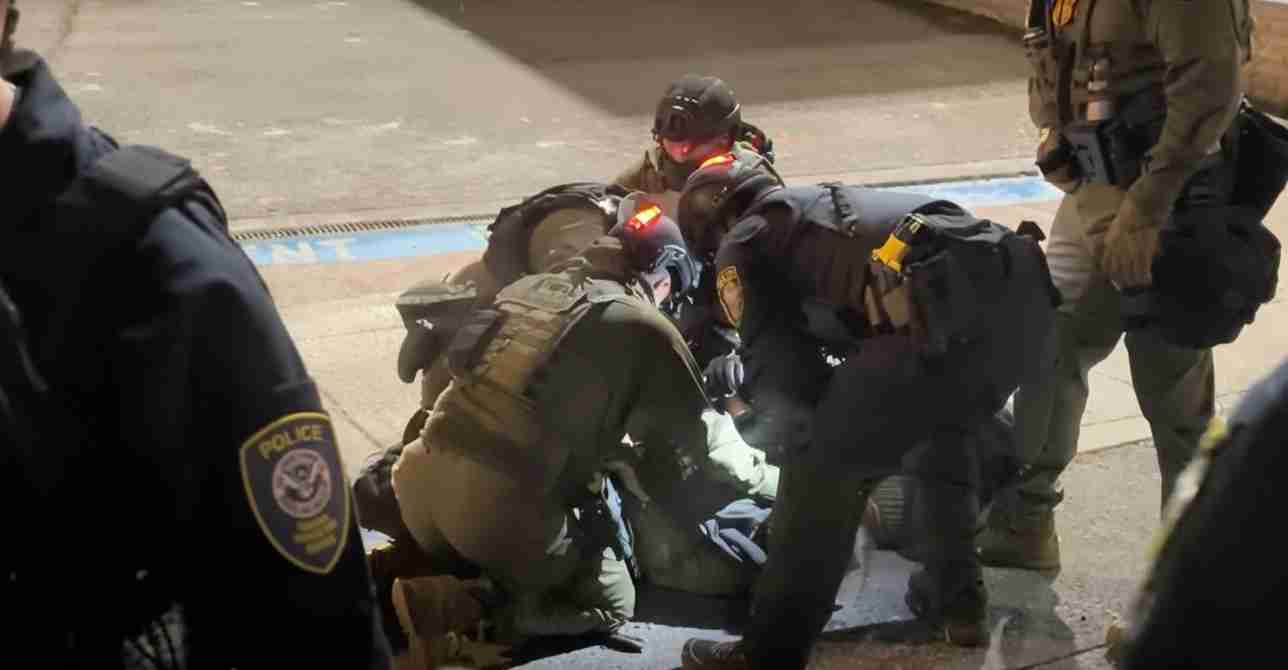
Federal judge blocks Trump National Guard Portland plan, citing state sovereignty and risk of “martial law”
A federal judge in Oregon has temporarily blocked the Trump administration’s plan to deploy the National Guard to Portland, citing constitutional limits on federal power and concerns about state sovereignty after Oregon and Portland sued to stop the move.
- Temporary restraining order: U.S. District Judge Karin Immergut halted federalization of ~200 Oregon National Guard troops pending further review.
- Legal standard: The court found the facts did not meet the high statutory threshold of 10 U.S.C. 12406 required to call the Guard into federal service.
- State sovereignty emphasized: The judge warned against military intrusion into civil affairs, stating the nation is “of Constitutional law, not martial law.”
- Appeal expected: The Department of Justice filed notice of intent to appeal to the Ninth Circuit.
Portland, Oregon (Times Media Service)
Details of the ruling
U.S. District Judge Karin Immergut issued a temporary restraining order stopping the federalization of roughly 200 Oregon National Guard troops for deployment to Portland. The judge ruled that the facts on the ground did not meet the statutory threshold in 10 U.S.C. 12406 for federalizing the Guard and that the President’s decision was “untethered to the facts.” Reporting drew on contemporaneous coverage from Military.com, ClickOrlando, and Euronews.
Why the court blocked the deployment
Judge Immergut found that protests in Portland were relatively small and not so violent or disruptive that local police could not handle them. She concluded the events did not meet the high legal bar in 10 U.S.C. 12406, noting that federal power to call up the Guard exists but is not unlimited. When local officials can maintain order, sending federal troops risks overruling state authority and eroding the constitutional balance of power.
Judge’s language on state sovereignty and “martial law”
“This country has a longstanding and foundational tradition of resistance to government overreach, especially in the form of military intrusion into civil affairs… this is a nation of Constitutional law, not martial law,” Judge Immergut wrote — language cited in multiple news reports including Military.com and ClickOrlando.
The legal test: 10 U.S.C. 12406
At the center of the dispute is 10 U.S.C. 12406, the federal statute that permits the President to call the National Guard into federal service in extreme situations. The statute reads:
10 U.S. Code § 12406 - National Guard in Federal Service: Call
Whenever—
1. the President considers that unlawful obstructions, combinations, or assemblages, or rebellion against the authority of the United States, make it impracticable to enforce the laws of the United States in any State by the ordinary course of judicial proceedings, he may call into Federal service such of the militia of any State, and use such of the armed forces, as he considers necessary to enforce those laws; or
2. the President considers that an insurrection, domestic violence, unlawful combination, or conspiracy, in any State, so hinders the execution of the laws thereof, and of the United States within the State, that any part or class of its inhabitants is deprived of a right, privilege, immunity, or protection named in the Constitution and secured by law, and the constituted authorities of that State are unable, fail, or refuse to protect that right, the President shall call into Federal service such of the militia of the State as he considers necessary to enforce those laws.
The judge’s question was direct: do the events in Portland meet that high legal bar? She concluded they do not (Euronews).
Administration’s position and planned appeal
The White House and the Department of Justice pushed back, characterizing Portland as unsafe and arguing federal troops were needed to protect federal property and enforce federal law. Officials had publicly described the city in dramatic terms — a characterization local leaders disputed and the court found exaggerated. After the restraining order, the DOJ filed a notice of intent to appeal to the Ninth Circuit; they are expected to argue the President has broad discretion under 10 U.S.C. 12406, especially when federal interests like protection of federal buildings are cited (Military.com).
Local resistance and legal challenge
Portland city officials and Oregon state leaders argued that local law enforcement retained control and that federalizing the Guard would interfere with state command of its own militia. The lawsuit framed the deployment as an overreach that threatened longstanding state powers and local democratic control (Euronews; ClickOrlando).
Reporting on troop numbers and logistics
Public filings and reporting indicate the plan involved federalizing about 200 Oregon National Guard troops for operations in Portland. Federalization would shift command and funding from state to federal authorities; the judge’s order prevents that shift while the court considers the legal claim (Military.com).
Quotes from the ruling
“This country has a longstanding and foundational tradition of resistance to government overreach, especially in the form of military intrusion into civil affairs… this is a nation of Constitutional law, not martial law,” Judge Immergut wrote — a passage cited across outlets including Military.com, ClickOrlando, and Euronews.
Implications for the world
Economic impact
Short-term disruption to Portland’s downtown was limited; protests cited by federal officials were small and did not trigger widespread business closures. A federal troop deployment could have raised insurance and security costs for businesses and deterred visitors, with ripple effects across local supply chains. The judge’s order reduces that immediate risk (ClickOrlando).
Political consequences
The case tests the boundary between federal power and state sovereignty. Democracies worldwide watch such disputes because they shape how central governments may act during unrest. A ruling that limits federal troop use for domestic policing reinforces that military force should be a last resort, not a routine law-enforcement tool (Euronews).
Social effects
For protest movements and civic groups, the ruling signals judicial willingness to protect civic space from military-style interventions. Communities fearing escalation during demonstrations may view the order as a protective precedent; governments favoring forceful responses may see it as a constraint (Military.com).
Cultural relevance
The language of state sovereignty and resistance to “martial law” resonates beyond the United States. Many countries balance national security and civil liberties; this case underscores the cultural value of civilian control and separation between military and police roles.
Practical applications for international actors
Lawmakers and courts worldwide may reference 10 U.S.C. 12406 and this ruling when crafting or testing rules on when central governments can deploy armed forces domestically. Diplomats and international organizations monitoring human rights will likely cite the case in discussions about proportionality and rule of law during civil unrest.
Next steps in the U.S. legal process
The DOJ’s notice of appeal moves the dispute to the Ninth Circuit, where expedited briefing and emergency relief requests could alter the restraining order. The circuit court will consider whether the President’s judgment under 10 U.S.C. 12406 merits deference in these circumstances. Legal watchers and Portland leaders will follow the appeal closely; the outcome may set precedent on presidential authority to deploy federal force inside a state (Military.com).
Sources and reporting
This article draws on court reporting and contemporaneous news coverage, including Military.com, ClickOrlando, Euronews, and Fortune.