
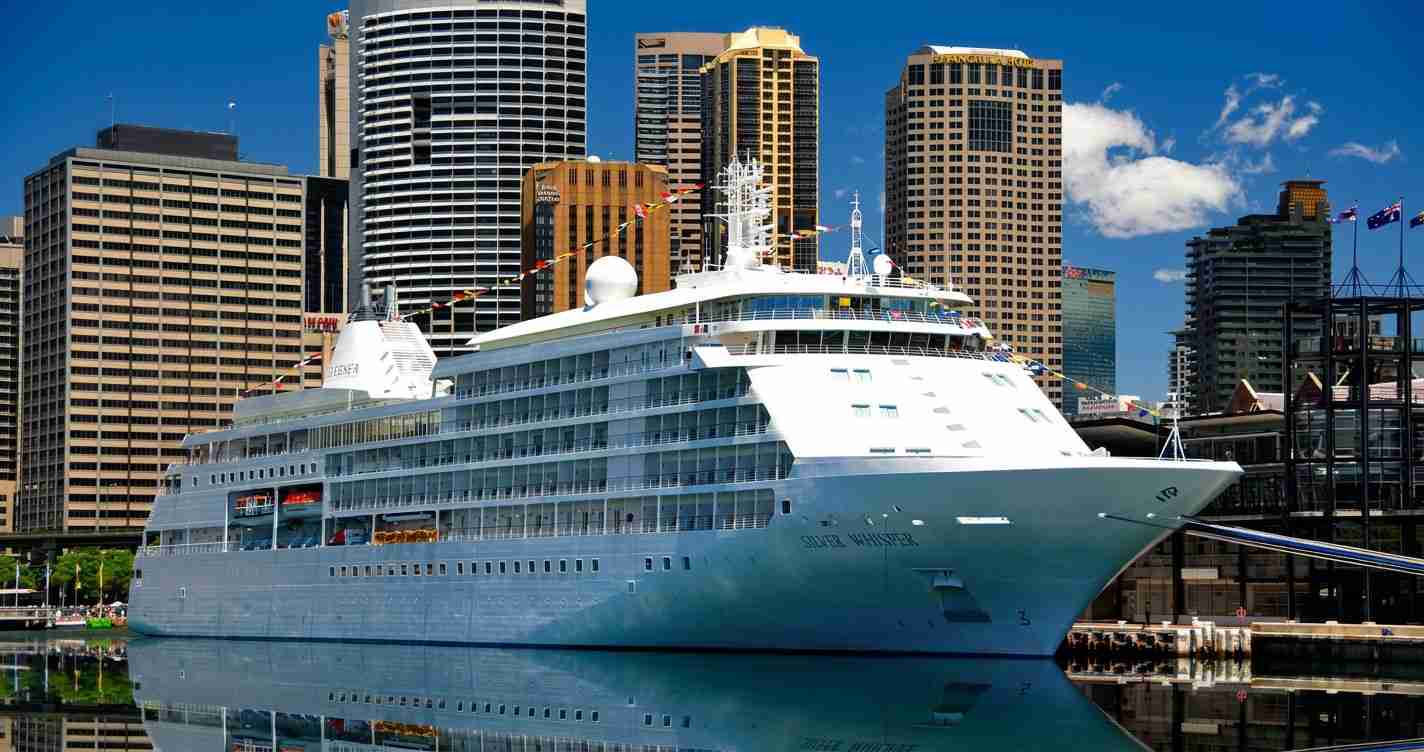
Luxury cruise ship Silver Whisper braves rough Pacific to rescue injured sailor from dismasted boat
On May 26, 2026, Silversea’s Silver Whisper diverted nearly seven hours to rescue a 74-year-old solo sailor with a suspected broken shoulder from the dismasted yacht April Alice about 489 miles off Tillamook, Oregon, amid gale-force seas.
- Rescue at sea: Silver Whisper diverted to reach a disabled, dismasted yacht nearly 500 miles offshore and recovered the injured solo sailor.
- Coordination: The Joint Rescue Coordination Centre (Victoria) relayed the distress; AMVER and the U.S. Coast Guard provided coordination and overwatch.
- Medical outcome: Sailor transferred to Silver Whisper, treated by ship medical staff, and expected to disembark in Vancouver on May 28.
- Legal framework: The operation illustrates SOLAS duties and the role of commercial vessels and AMVER in remote search-and-rescue.
How the call for help reached a ship at sea
Coast Guard watchstanders in the U.S. Northwest received a distress relay from the Joint Rescue Coordination Centre in Victoria, British Columbia. The small yacht April Alice had lost its mast and all communications while sailing from Hawaii toward British Columbia in gale-force winds and roughly 30-foot seas. Because the sailboat was so far offshore, a helicopter rescue was ruled out and surface help was needed (BeachConnection).
AMVER and the choice of responder
The U.S. Coast Guard activated AMVER, the global merchant-vessel tracking system, to find the nearest capable ship. AMVER identified Silver Whisper as the closest suitable responder. The ship’s master, Captain Michele Macarone Palmieri, altered course and completed a roughly seven-hour diversion to reach the disabled yacht (Cruise Hive; Marine Insight).
Conditions at sea and the difficulty of the rescue
Passenger photos and accounts show April Alice without its mast and battered by the weather. Guests reported the ship slowed and altered onboard operations to perform a safe transfer; one passenger described finding the sailboat in such conditions as “a needle in a haystack,” noting it took seven hours to reach the small vessel with no exact coordinates (Cruise Hive; Cruise Mummy).
Operational changes: Passengers reported ship stabilizers were retracted during the maneuver, making onboard motion rougher; crew asked passengers to remain in cabins while the transfer occurred. Some passengers noted delayed arrivals or missed connections but praised the decision to help (Cruise Hive; Fox News).
Medical care and transfer
On arrival, Silver Whisper’s crew and medical staff transferred the 74-year-old Canadian solo sailor aboard and delivered immediate care for a left-shoulder injury described by some sources as a broken shoulder. The transfer from the yacht to the cruise ship took about an hour once vessels were alongside, and the ship’s medical team continued care while steaming toward Vancouver, with an expected arrival and disembarkation on May 28 (Cruise Hive; BeachConnection).
Legal duties and maritime systems that made the rescue possible
Under SOLAS (the International Convention for the Safety of Life at Sea), masters are obliged to help people in distress at sea when safe and reasonable. Large commercial vessels, including luxury cruise ships, participate in global search-and-rescue frameworks. AMVER helps authorities locate the nearest suitable ship when incidents occur far from shore (Cruise Mummy; Marine Insight; BeachConnection).
The U.S. Coast Guard provided overhead surveillance with a C-27J Spartan fixed-wing aircraft to monitor conditions and coordinate with Silver Whisper. Canadian and U.S. authorities exchanged position fixes from the sailor’s handheld satellite communicator to narrow the search area (BeachConnection).
Passengers and crew reactions
Social media posts praised the seamanship and rapid response of the captain and crew; many passengers said the delay was worth saving a life, despite travel inconveniences. One passenger post mentioned a crew injury during the broader episode, though mainstream reporting focuses on the rescued sailor’s injuries and provides no official detail about crew injuries (Fox News; Cruise Hive).
About Silver Whisper
Silver Whisper is a 28,258‑gross‑ton luxury ship, marketed with high-end amenities including shops, a spa and entertainment. Reporters and passengers highlighted the contrast between the vessel’s pampered image and the demanding seamanship required in a remote, rough-seas rescue (Cruise Mummy; Cruise Hive).
Timeline and voyage status
Silver Whisper was on the final leg of a 24-night one-way voyage from Papeete, Tahiti, to Vancouver when the relay arrived. After diverting and conducting the rescue on May 26, the ship was reported near Neah Bay, Washington, on May 27 and approaching Vancouver for a scheduled May 28 arrival (Cruise Hive).
Implications for The World
Economic: The event underscores how commercial and leisure vessels contribute to global maritime safety; AMVER and the merchant fleet form a safety net in remote ocean areas, with cost and insurance implications for operators (BeachConnection; Marine Insight).
Political: The rescue highlights international coordination between Canadian and U.S. authorities and reliance on private vessels under SOLAS; it may prompt renewed attention to AMVER participation, SAR funding and cross-border planning (BeachConnection).
Social and cultural: The incident resonated with passengers and coastal communities, illustrating risks faced by solo sailors and the importance of satellite communicators, EPIRBs and reliable float plans. The image of a luxury liner performing a technical rescue bridges leisure travel and life‑saving seamanship (Cruise Hive; Cruise Mummy).
Practical: For mariners and emergency planners, the episode underlines the need for reliable satellite communications, current float plans for solo sailors and continued investment in long-range SAR assets; for passenger operators, it reinforces training for non-routine medical transfers far from shore (Marine Insight; Cruise Hive).
Sources
“The decision to slow and assist, despite rough seas and schedule impacts, reflects the core maritime duty to help those in danger at sea.”
Reporting assembled from passenger accounts, maritime sources and regional Coast Guard summaries cited above.


