
Federal judge rules Trump Oregon National Guard deployment unconstitutional, issues permanent injunction
A federal judge in Portland issued a permanent injunction ruling President Donald Trump’s June 7, 2025 memorandum that federalized the Oregon National Guard for law enforcement in Portland unconstitutional under the 10th Amendment, barring commandeering without state consent.
Key takeaways
- Permanent injunction: U.S. District Court Judge Karin Immergut found the June 7, 2025 presidential memorandum unconstitutional under the 10th Amendment, barring federal commandeering of Oregon’s Guard for policing in Portland. official court opinion
- Plaintiffs: The State of Oregon and the City of Portland sued, arguing the order infringed state sovereignty and exceeded federal authority.
- Legal standard: The ruling relies on long‑standing anti‑commandeering Supreme Court precedents and limits federal use of state National Guard units for local law enforcement absent consent or clear legal authority.
Background: the federalization order and the legal challenge
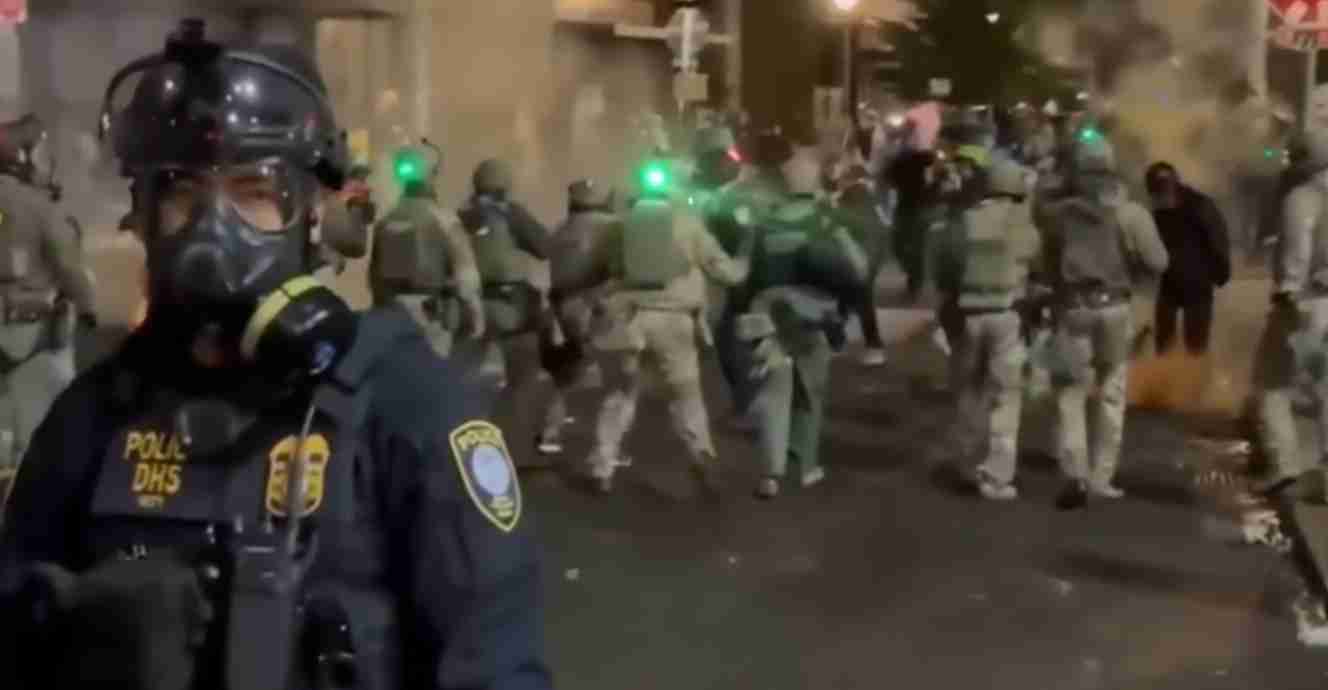
On June 7, 2025, the president issued a memorandum authorizing federal control over National Guard members to assist law enforcement in Portland amid protests. Oregon state officials and Portland city leaders quickly challenged that move in federal court, arguing it violated the Constitution’s division of power between the federal government and the states.
In her written opinion, Judge Karin Immergut examined the memorandum’s scope and the federal government’s legal basis for seizing control of state military forces. The plaintiffs contended that the federalization exceeded federal law and undermined Oregon’s sovereignty when federal officials assumed command of state troops for domestic policing. The official court opinion is available for review.
Judge’s reasoning: the 10th Amendment and anti-commandeering principles
Central holding: Judge Immergut centered the ruling on the 10th Amendment, which reserves powers not delegated to the federal government to the states. The court concluded that converting Oregon National Guard members into federal law‑enforcement agents without state consent violated anti‑commandeering principles rooted in Supreme Court precedent.
The opinion cites longstanding cases that restrict the federal government’s ability to compel state officials or commandeer state resources for federal purposes. Judge Immergut emphasized that any federal use of a state National Guard for domestic law enforcement must fit within narrow constitutional or statutory exceptions—such as a clearly authorized national emergency or an insurrection that triggers distinct federal powers. See the full decision.
What the permanent injunction does — and does not — bar
The permanent injunction issues a clear rule: federal officials may not commandeer Oregon’s National Guard to act as federal law enforcement in Portland without meeting strict constitutional and statutory requirements. Practically, the order prevents the federal government from assuming control of the Oregon Guard for local policing unless Congress and the Constitution provide explicit authority or the state consents.
The ruling does not block federal responses to genuine national emergencies or insurrections if legal conditions for federal action are properly met. Instead, it requires the federal government to justify any future federalization under established legal standards rather than by broad executive memorandum. The court’s analysis is set out in the court document.
Local angle: how this affects Portland and Oregon
Portland city leaders and Oregon officials argued the federal deployment disrupted local policing plans and strained state‑federal relations. The injunction restores primary legal control of the Oregon National Guard to state officials: the governor retains command unless the state voluntarily surrenders control or a valid federal law or constitutional basis applies.
For Portland residents, the ruling changes how public safety forces are deployed during protests or civil unrest. City officials regain greater authority to determine whether and how the National Guard is used within city limits, addressing community concerns about federal agents operating without coordination with local leaders.
Court precedents and national significance
Although this case arises from Oregon facts, Judge Immergut’s reliance on anti‑commandeering principles ties it to broader federalism jurisprudence. The ruling reinforces that the federal government cannot unilaterally turn state military forces into federal law‑enforcement tools without satisfying constitutional and statutory limits.
Legal experts note the decision could influence other state challenges to federal attempts to control National Guard forces for policing. The injunction sets a high bar for presidential directives seeking to federalize state troops for domestic law enforcement and may prompt closer scrutiny of federal interventions.
Reactions from state and city officials
“This ruling affirms state rights and local control over public safety,” said Oregon and Portland leaders, framing the decision as a protection for elected officials’ authority to decide how state military forces are used.
Federal officials have indicated they are reviewing the opinion and considering legal options, including potential appeals. Any further litigation would proceed through the federal appeals process and could ultimately reach the U.S. Supreme Court, which might clarify national rules on federalization and the interplay between executive power and state sovereignty.
Legal and policy stakes moving forward
This case places the legal burden on the federal government to show clear congressional authorization or constitutionally recognized grounds before federalizing state Guard units for domestic policing. Policymakers may consider whether new federal legislation is needed to define when national intervention is appropriate and how to coordinate with states to avoid constitutional conflicts.
Because the ruling rests on established constitutional principles, attempts to bypass the court’s requirements face significant legal obstacles. The decision may spur states to adopt clearer plans for requesting or rejecting federal assistance and could motivate Congress to revisit statutes such as the Insurrection Act.
Implications for The World
Economic impact: For international businesses and markets, the decision is unlikely to have immediate direct economic consequences. Still, clearer limits on federal intervention can reduce uncertainty about how civil unrest is handled—stability that matters to investors, tourists, and global supply chains.
Political consequences: For observers abroad, the ruling highlights how U.S. federalism constrains executive power and demonstrates domestic legal checks—courts and state governments—can limit national leaders’ use of security forces.
Social and cultural effects: The injunction responds to concerns about federal agents operating in cities without local approval. For activists and civil‑society groups worldwide, the decision affirms a legal route to challenge perceived federal overreach and may influence how protest movements and policymakers think about protecting local autonomy.
For legal scholars, policymakers and civic leaders, the ruling is a reminder that constitutional protections like the 10th Amendment shape how states, cities and national governments share authority over security. The official court opinion is available for examination.
Sources and documents: State & City v. Trump — court documents and opinion (download)


