Portland police order tents cleared at South Portland ICE facility, warn of stepped-up enforcement as arrests mount
Portland police ordered tents cleared outside the South Portland ICE facility and have made multiple arrests, saying they will step up enforcement amid ongoing demonstrations that have drawn federal scrutiny and prompted political and legal disputes.
Key takeaways
- Encampments removed: Police ordered protesters to remove tents and encampments near the South Portland ICE facility, citing city zoning rules and public safety concerns. (Sources: Portland Police, OPB)
- Arrests reported: Officers made multiple arrests on charges including disorderly conduct and fighting; some detainees said they were defending themselves amid chaotic encounters. (Sources: Portland Police, OPB)
- Federal scrutiny: The protests have drawn criticism from the Trump administration and a federal review, with threats to cut funding and increased political pressure. (Source: OPB)
Police orders, tent removal and the rationale
Portland police announced a series of orders this week demanding protesters clear tents and encampments around the South Portland ICE facility. In a public update, the department said the actions follow city zoning codes and are meant to address public safety risks around the federal building (see the Portland Police update).
City officials told reporters they had documented cases where detainees were held longer than allowed at the facility and said encampments created safety and access problems for neighbors and workers. Local coverage also noted that the city planned more strict enforcement after those reports surfaced (OPB).
“The actions follow city zoning codes and are meant to address public safety risks around the federal building.” — Portland Police public update
Police enforcement and arrests
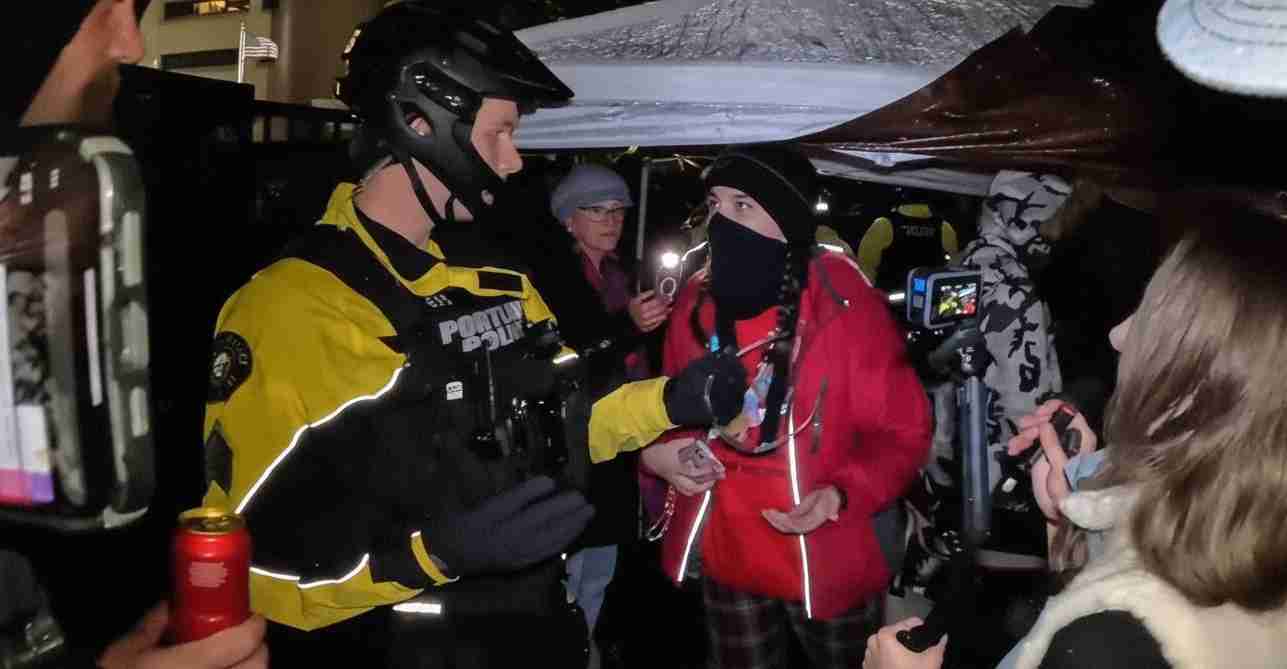
Officers made several arrests at recent demonstrations. The police statement listed charges including disorderly conduct and fighting, and video from the scene shows people being detained outside the ICE building (Portland Police; OPB).
Some arrestees and witnesses said detentions occurred amid chaotic scenes and that they were acting in self‑defence when detained. The police update also said undercover personnel monitored protest activity; footage circulated online appears to show plainclothes officers in crowds, a tactic police say helps detect unlawful behavior while minimizing public disruption (video).
Law enforcement emphasized the need to balance protecting the right to protest with enforcing public safety laws and referenced policy changes since 2020 aimed at adaptive enforcement without unduly restricting peaceful demonstrations (OPB).
Claims of press interference and counter-protests
Local reporting documented incidents involving journalists. Some members of the press reported assaults while covering the protests, and at least one reporter was arrested. Those events prompted questions from media watchdogs and local leaders about whether police acted quickly enough to protect press on scene (OPB).
Protesters and witnesses also reported confrontations with counter-protesters. Several accounts described rapid escalation to violence, producing arrests and injuries; city officials and police said investigations and reviews of arrest reports are underway (Portland Police).
Federal reaction and political pressure
The demonstrations drew attention in Washington. The Trump administration criticized Portland’s handling, warned of potential federal funding cuts, and ordered a formal review, escalating tensions between local leaders and federal agencies (OPB).
City officials who support sanctuary policies defended their approach, saying the city seeks to protect civil liberties while addressing safety concerns and local code violations. The standoff mirrors a national debate over how sanctuary cities coordinate with federal immigration enforcement.
Jurisdiction, legal reviews and transfers
Legal questions surfaced over which authorities may act at and around the ICE facility. Portland’s sanctuary status complicates relations with federal agencies, and officials are weighing city police powers versus federal law enforcement roles — especially when arrests or transfers intersect with immigration matters (OPB).
Some arrestees were transferred to facilities in neighboring Clark County, Washington; the local district attorney said it is reviewing charges and prosecution decisions tied to recent arrests, raising questions about due process and cross‑jurisdictional handling (OPB (Clark County report)).
Multimedia and on-the-ground reporting
Local TV crews and social media streams provided live views of protests and police response. Video posted by reporters shows police presence, tent removals, and moments when officers took people into custody (example video; additional footage).
Voices on both sides
Protest organizers say demonstrations are an exercise of free speech aimed at drawing attention to federal detention practices and deportations. They argue visible, sustained actions at the South Portland ICE facility are necessary to highlight conditions detainees face.
Police and city officials counter that unlawful encampments and violent incidents cannot be ignored. They stress rules exist to protect public safety, maintain access to businesses and residences, and prevent property damage; the department cited those concerns in its public update (Portland Police).
Implications for The World
Economic and civic costs: Sustained enforcement actions — tent clearances and arrests — can disrupt commerce, strain city budgets, and divert law enforcement resources from other calls for service. Businesses near the ICE facility reported reduced foot traffic and extra security costs.
Political and legal ripple effects: Outcomes in Portland may influence debates in other cities and at national levels, prompting reassessments of coordination between localities and central authorities, and potentially setting legal precedents about protest rights and enforcement.
Social and cultural consequences: Reports of alleged assaults on journalists and the use of plainclothes officers raise concerns about transparency and press freedom that resonate beyond the U.S. The standoff highlights the tension between civil liberties and public order.
Practical public policy takeaways: Cities watching Portland may emphasize clear encampment rules, timely responses to detainee mistreatment reports, and documented communication channels between local and federal authorities to reduce misunderstandings and legal disputes.
Reporting and sources
This article draws on official police updates, local reporting and video documentation. Primary sources include the Portland Police public statement; coverage from OPB and OPB (Clark County report); and live video reporting (video, video).
Reporting continues as events develop.