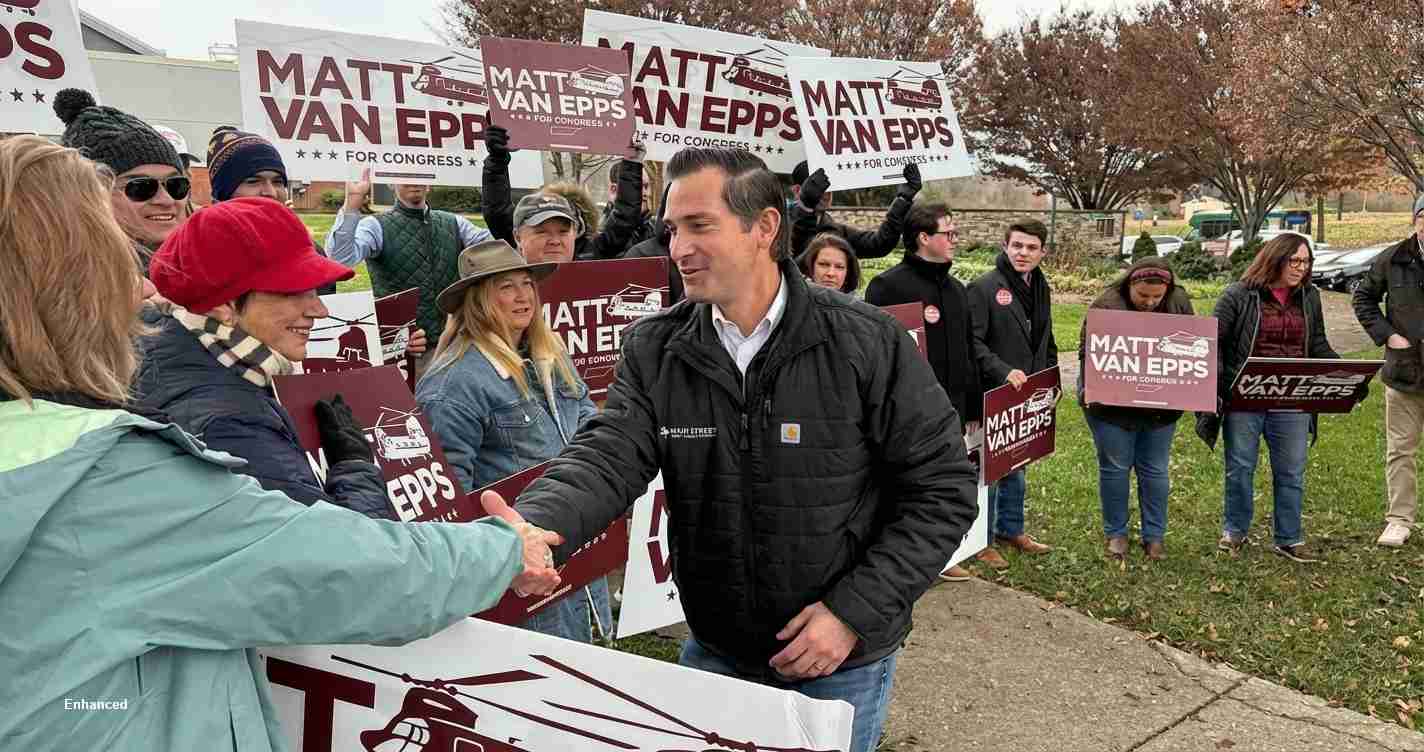
Trump-backed Republican holds Tennessee seat in special election — Matt Van Epps defeats Aftyn Behn in contest seen as early barometer for 2026
Republican Matt Van Epps won the December 2, 2025 special election for Tennessee’s 7th Congressional District, defeating Democrat Aftyn Behn 53.9% to 45.0%, filling the seat vacated by Mark Green and keeping GOP control effective immediately.
Key takeaways
- Winner: Matt Van Epps (Republican) — 53.9% (96,988 votes).
- Runner-up: Aftyn Behn (Democrat) — 45.0% (81,044 votes).
- Margin: 8.9 percentage points; Van Epps carried 12 of the district’s 14 counties.
- Reason for special election / term: Seat vacated by Mark Green on July 20, 2025; Van Epps will serve the remainder of the 119th Congress through January 3, 2027.
- Source: 2025 Tennessee’s 7th congressional district special election — Wikipedia
Election results and turnout
Van Epps secured 53.9% of the vote (96,988 votes) to Aftyn Behn’s 45.0% (81,044 votes), a margin of 8.9 percentage points. The result kept Tennessee’s 7th Congressional District in Republican hands but revealed a more competitive map than some previous cycles.
Local turnout for special elections is typically lower than in presidential or midterm years, which affected raw totals and magnified the importance of county-level performance. Van Epps won 12 of the district’s 14 counties, the geographic sweep offsetting Democratic gains in denser urban pockets.
(source: 2025 Tennessee’s 7th congressional district special election — Wikipedia)
Background and why the seat opened
The vacancy occurred when Republican Representative Mark Green resigned on July 20, 2025 to pursue private-sector work. The resignation prompted the special election that drew national attention as an early test of voter sentiment ahead of the 2026 midterms.
Green’s departure followed a tenure that included notable legislative activity; the special election timeline condensed campaigning and heightened the role of outside spending and turnout operations. (source: 2025 Tennessee’s 7th congressional district special election — Wikipedia)
Primary contests that set the stage
Republican primary: Van Epps, a former commissioner of the Tennessee Department of General Services (2024–2025), won the October 7 Republican primary with 51.56% (19,006 votes), carrying 12 of 14 counties and defeating Jody Barrett, who captured roughly a quarter of primary support.
Democratic primary: Aftyn Behn, a state representative from Tennessee’s 51st district, narrowly won the Democratic primary. She performed strongly in key population centers — including Montgomery and Davidson counties — and won Williamson County, which positioned her as Democrats’ best chance to flip the seat in the special.
(source: 2025 Tennessee’s 7th congressional district special election — Wikipedia)
Campaign finance and outside groups
Funding flowed heavily into the race. Van Epps raised $992,716 (including $761,549 from individuals and $231,167 from other sources) and benefited from outside conservative organizations such as the Club for Growth and the With Honor Fund, which aided independent expenditures and messaging.
Behn outraised Van Epps overall, collecting $1,230,629 (with $708,892 from individuals and $521,737 from other sources), reflecting national Democratic interest in competitive suburban districts and a willingness to test whether Democrats can expand in similar areas.
(source: 2025 Tennessee’s 7th congressional district special election — Wikipedia)
What the margin and results tell us about the political landscape
Analysis: Van Epps’ victory keeps the seat under GOP control but with a reduced margin compared with prior cycles — a signal that suburban and exurban dynamics may be shifting. Democrats narrowed the gap from 2024, suggesting candidate quality and turnout strategy matter in off-cycle contests.
“The race served as an early barometer for 2026 — showing Republican resilience, but Democratic potential where turnout and messaging align.”
For Republicans, the win validates targeted fieldwork and sustained loyalty across most counties. For Democrats, Behn’s performance — closing to single digits — may encourage further investment in comparable suburban districts in 2026.
(source: 2025 Tennessee’s 7th congressional district special election — Wikipedia)
Local issues that shaped the contest
Voters discussed economic concerns, health-care access, education policy and infrastructure. Van Epps emphasized local roots and conservative fiscal themes; Behn campaigned as a state lawmaker focused on community priorities and targeted outreach in populous counties.
The campaign blended national narratives — including social policy and economic outlook — with hyper-local issues. Rural and small-town areas remained reliably Republican, while Democrats made gains in densely populated counties where schools and local services resonated more.
(source: 2025 Tennessee’s 7th congressional district special election — Wikipedia)
National and midterm implications
Analysts view this special election as an early litmus test for the 2026 midterms. A Republican hold with a narrower margin can be interpreted both as confirmation of GOP durability and as evidence Democrats can make inroads in certain suburban districts.
Both parties will study turnout patterns, county-level swings and outside spending impact to refine 2026 strategies. While a single House seat rarely alters immediate national policy, trends across races will inform narrative and tactical adjustments.
(source: 2025 Tennessee’s 7th congressional district special election — Wikipedia)
Implications for the world
- Markets & investors: Individual House outcomes are limited in isolation, but cumulative signals from early races help markets gauge likely policy direction ahead of 2026.
- Allies & foreign policy: Single-seat changes rarely sway immediate foreign policy, yet broader trends can shift legislative priorities on defense and international commitments.
- Global civil society: Competitive suburban shifts matter to observers studying democratic behavior, media influence and mobilization patterns.
- Trade & local economies: Representatives who prioritize infrastructure and workforce development affect regional industries tied to global supply chains.
(source: 2025 Tennessee’s 7th congressional district special election — Wikipedia)
Sources and further reading
Primary reporting and aggregated data assembled from Times Media Service research and publicly available election data. For full election details, see: 2025 Tennessee’s 7th congressional district special election — Wikipedia