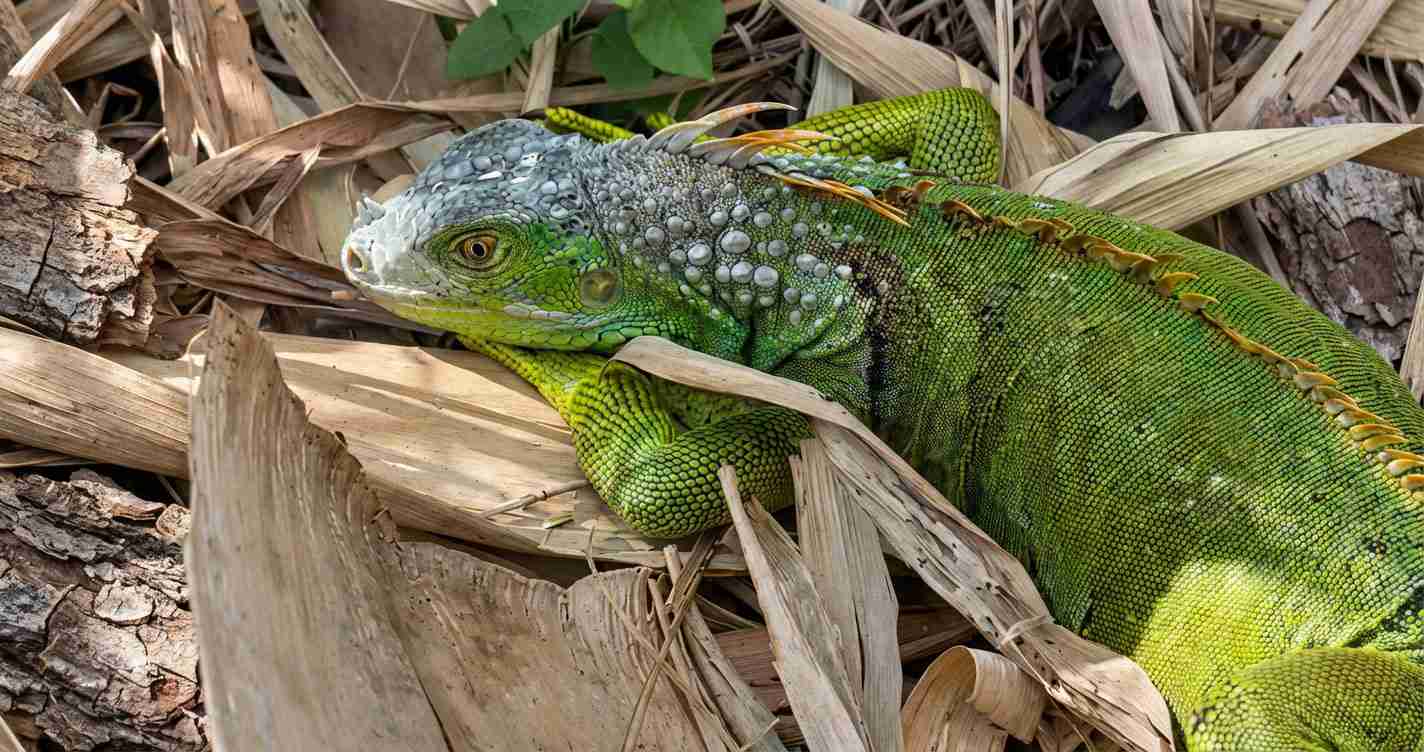
Florida removes 5,195 invasive green iguanas during two-day permitless window as record cold snaps stun reptiles
Florida wildlife officials reported the removal of 5,195 cold-stunned green iguanas during a brief, permitless collection window on Feb. 1–2, 2026, following a record South Florida cold snap, aiming to reduce animal suffering and ecological damage.
- Total collected: 5,195 cold-stunned iguanas turned in Feb. 1–2, 2026 — as reported by the FWC news release on green iguanas removed.
- Collection breakdown: Sunrise 3,882; Tequesta 1,075; Marathon 215; Fort Myers 23 — intake organized through FWC offices.
- Legal tool: The measure relied on Executive Order 26-03, a two-day emergency suspension of the permit requirement for live, cold-stunned iguanas.
Background: the species and rules
Green iguanas are a nonnative, invasive reptile in Florida. They are designated a prohibited species under state rules, so possession normally requires a permit. On private property, landowners may humanely kill them year-round, provided actions comply with anti-cruelty statutes. For guidance, the FWC directs residents to the FWC news release on green iguanas removed and related resources on nonnative species.
Two-day exemption and the cold-stun response
A record cold front in late January and early February 2026 produced temperatures that cold-stunned large numbers of iguanas — rendering them slow, immobile and vulnerable. To respond, the Executive Order 26-03 temporarily suspended permit requirements for capturing live, cold-stunned green iguanas in the wild for only two days: Feb. 1 and Feb. 2.
The brief exemption aimed to allow people already on the ground to collect and turn in reptiles rapidly, both to reduce suffering and to limit damage to property and native ecosystems. Drop-off windows were restricted to streamline humane handling and intake: Feb. 1, 9 a.m.–noon; Feb. 2, 8 a.m.–4 p.m., at designated FWC offices.
Collection sites and totals
- Sunrise: 3,882 iguanas (about 13 miles west of Fort Lauderdale).
- Tequesta: 1,075 iguanas (north of West Palm Beach).
- Marathon (Florida Keys): 215 iguanas.
- Fort Myers: 23 iguanas.
Where the animals went: handling and disposition
The FWC reported that many collected iguanas were routed to permitted holders when feasible for out-of-state sale; where transfer was not feasible, trained FWC staff humanely euthanized animals consistent with anti-cruelty standards. Media reporting, including a Popular Science article on euthanasia, described humane euthanasia steps for frozen or severely cold-stunned iguanas.
FWC reaction and coordination
FWC Executive Director Roger Young credited broad coordination at the Feb. 4 Commission meeting in Tallahassee:
“The removal of over 5,000 of these nonnative lizards in such a short time span was only possible thanks to the coordinated efforts of many staff members in multiple FWC divisions and offices, our partners and, of course, the many residents that took the time to collect and turn in cold-stunned iguanas from their properties.”
FWC emphasized the emergency nature of the order; it expired after the two-day period. Outside such narrow exemptions, possession, transport and sale of green iguanas remain regulated and require permits. Property owners seeking help can contact professional wildlife control operators listed by FWC.
Media coverage and independent reporting
Local and national outlets covered the FWC action. Coverage includes a Fox News summary, a 10 Tampa Bay video showing residents collecting iguanas, and the aforementioned Popular Science article on humane euthanasia practices. These reports corroborate FWC’s public statements and provide on-the-ground visuals and interviews.
Why rapid removal matters: ecological and economic impacts
Invasive green iguanas damage native plant communities by overgrazing vegetation, dig burrows that erode banks and infrastructure, and compete with native species. They also damage ornamental plants and crops, imposing costs on homeowners, farmers and municipalities. Rapid removal after weather events reduces immediate property damage and limits further dispersal.
Questions and limits: what the action did not address
While the two-day operation removed more than 5,000 iguanas, experts note that green iguanas remain established in parts of Florida. A brief exemption does not prevent long-term recovery or new introductions. The FWC’s standard tools — permitting, education, and professional removal — remain central to longer-term control efforts.
Implications for other jurisdictions
- Emergency regulatory tools: The FWC case shows how temporary authority can balance animal welfare with biosecurity.
- Agency preparedness: Rapid responses rely on clear legal authority, staffed intake sites, and partnerships with permitted holders and wildlife control operators.
- Public engagement: Residents’ participation was critical, but clear guidance is essential to avoid unsafe or illegal captures outside permitted windows.
- Trade and welfare: Transfers of animals to permitted holders for sale raise transparency and cross-jurisdiction welfare questions that merit tracking and reporting.
Source notes and practical resources
This article is based on FWC official materials: the FWC news release on green iguanas removed and the posted Executive Order 26-03. Independent reporting includes a Fox News summary, a 10 Tampa Bay video, and a Popular Science article on euthanasia. No additional FWC updates were posted after Feb. 4, 2026, on the FWC release page.
Property owners seeking guidance can consult FWC resources linked above and the agency’s nonnative species guidance pages listed in the FWC news release and the executive order.