Florida deploys 120 robot rabbits in the Everglades to trap invasive Burmese pythons
Gainesville, Florida — Florida and partners have deployed 120 robotic marsh‑rabbit decoys in Everglades National Park to lure, detect and enable rapid removal of invasive Burmese pythons using heat, scent, motion, solar power and AI cameras.
Key takeaways
- What: 120 robotic marsh‑rabbit decoys to attract and help remove Burmese pythons — partners and coverage include SFWMD and CBS News.
- How: Robots simulate movement, emit heat and scent, run on solar power and feed camera footage into an AI detector that alerts crews for removal — reported by CBS News, SFWMD and the Palm Beach Post.
- Scale & cost: ~120 units deployed; each costs about $4,000 and aims to be a more ethical alternative to live-lure methods (CBS News, Route Fifty).
Main story
Key information
Florida’s effort is led by the South Florida Water Management District (SFWMD) in partnership with the University of Florida, working with wildlife and park agencies. Coverage and analysis appear in CBS News and Route Fifty.
Robotic lures: design and operation
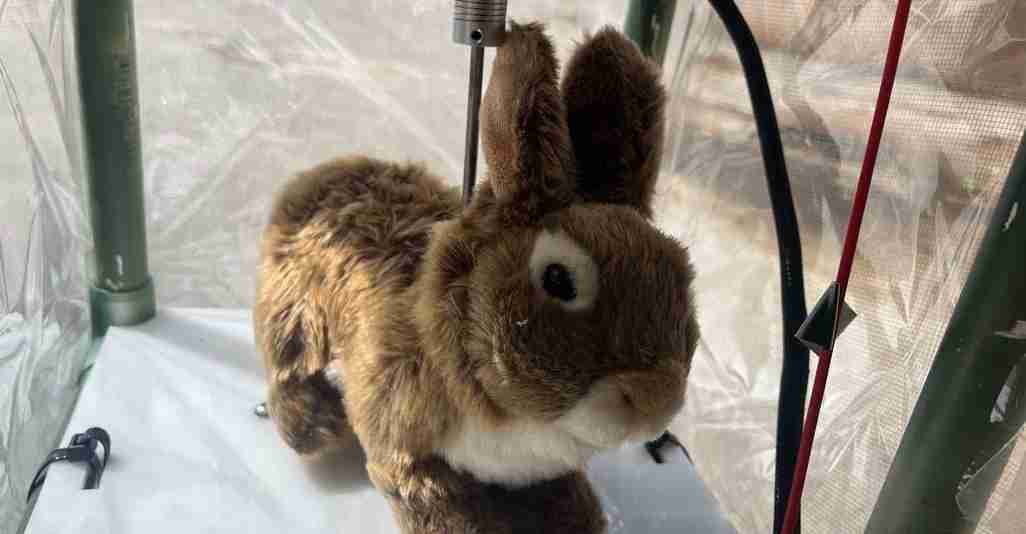
The decoys are modeled on the native marsh rabbit in appearance, movement and scent. Each unit contains:
- Small motors to simulate hopping and subtle motion.
- A heat pack calibrated to approximate a live rabbit’s body temperature.
- A scent diffuser that releases rabbit odor patterns.
- Solar panels and batteries designed for wetland durability.
- Cameras that stream to an AI detection system which alerts response teams when a python approaches.
Design and monitoring details are described by SFWMD and CBS News. The University of Florida helped develop both the robots and the AI-based monitoring platform (UF).
Detection first, capture second
The program emphasizes rapid detection. When sensors and AI flag a nearby python, contractors or wildlife officers are dispatched to capture and remove the snake before it breeds or relocates. Video from field trials shows teams responding to alerts in real time (UF; Route Fifty).
Scale, cost and ethics
Approximately 120 robotic rabbits were placed in the field in summer 2025 in hard‑hit zones of the Everglades. Each unit costs roughly $4,000 to produce. Officials note the robots are considered less costly and more ethical than earlier methods that used live rabbits as lures, which raised welfare concerns and required intensive management (CBS News; Route Fifty).
Detection is the main challenge
Scientists emphasize that finding Burmese pythons is the toughest issue: the Everglades’ vast, watery, and vegetated terrain allows snakes to hide effectively. Prior tactics — pay‑for‑removal, public hunting challenges and trapping — had limited reach against a breeding population with few natural predators in this environment (SFWMD python program; CBS News).
Ecological toll of the invader
Burmese pythons — introduced through escapes, pet releases and a breeding facility destroyed by Hurricane Andrew — have become apex predators in the Everglades. Studies estimate declines of up to 95% in some small mammal species inside park boundaries. Birds, turtles and even alligators are preyed upon by large pythons; females can lay large clutches of eggs, compounding control challenges (CBS News; Route Fifty).
Early results and the road ahead
Officials call the project experimental. Field teams report promising detections and prompt removals during initial deployments, but scientists caution more time and data are needed to know if robot rabbits can reduce python numbers at scale. The program will be evaluated as part of broader capture and public‑engagement efforts (SFWMD; Palm Beach Post).
“The robot‑rabbit experiment marks a new chapter in SFWMD python control efforts,” officials say — emphasizing adaptive monitoring and peer review as more data accrue.
Collaboration and wider python control efforts
The robotic-lure program is part of a larger partnership including the U.S. Fish and Wildlife Service, the National Park Service, the Florida Fish and Wildlife Conservation Commission, academic partners and contractors. Other efforts include contractor-led removals, public python challenges that reward hunters, outreach to discourage exotic‑pet releases, and tracking programs to map python spread (Route Fifty; SFWMD python program).
Why the local angle matters for global ecosystems
Invasive species are a global concern: the Everglades case shows how wildlife trade, severe weather and habitat change enable nonnative predators to upend ecosystems. Florida’s robotic-lure experiment may offer lessons for other regions dealing with hard‑to‑detect invasive predators.
Implications for the world
- Economic: Loss of native species can harm tourism, fishing and birdwatching, increasing management costs (SFWMD; CBS News).
- Political: The project highlights needs for biosecurity, pet‑trade rules and disaster planning — lessons relevant to policymakers worldwide (Route Fifty).
- Social & cultural: Disappearing native species affect outdoor traditions and cultural connections; public outreach to prevent releases is crucial (SFWMD; Palm Beach Post).
Practical applications and limitations
Robot‑lure technology could be adapted to other terrains and target species, but success depends on habitat, behavior, durability and long‑term costs. The SFWMD and university partners plan peer review and publication of results to inform scalability and cost‑effectiveness (UF; Route Fifty).
Ongoing questions and data needs
Key uncertainties remain: Can robots scale cost‑effectively? Will pythons habituate and ignore decoys? How will units hold up year‑round in storms and floods? Authorities emphasize monitoring, adaptive design and peer review as they collect more field data (SFWMD; CBS News; Palm Beach Post).
Sources: SFWMD; CBS News; University of Florida; Route Fifty; Palm Beach Post; SFWMD python program.