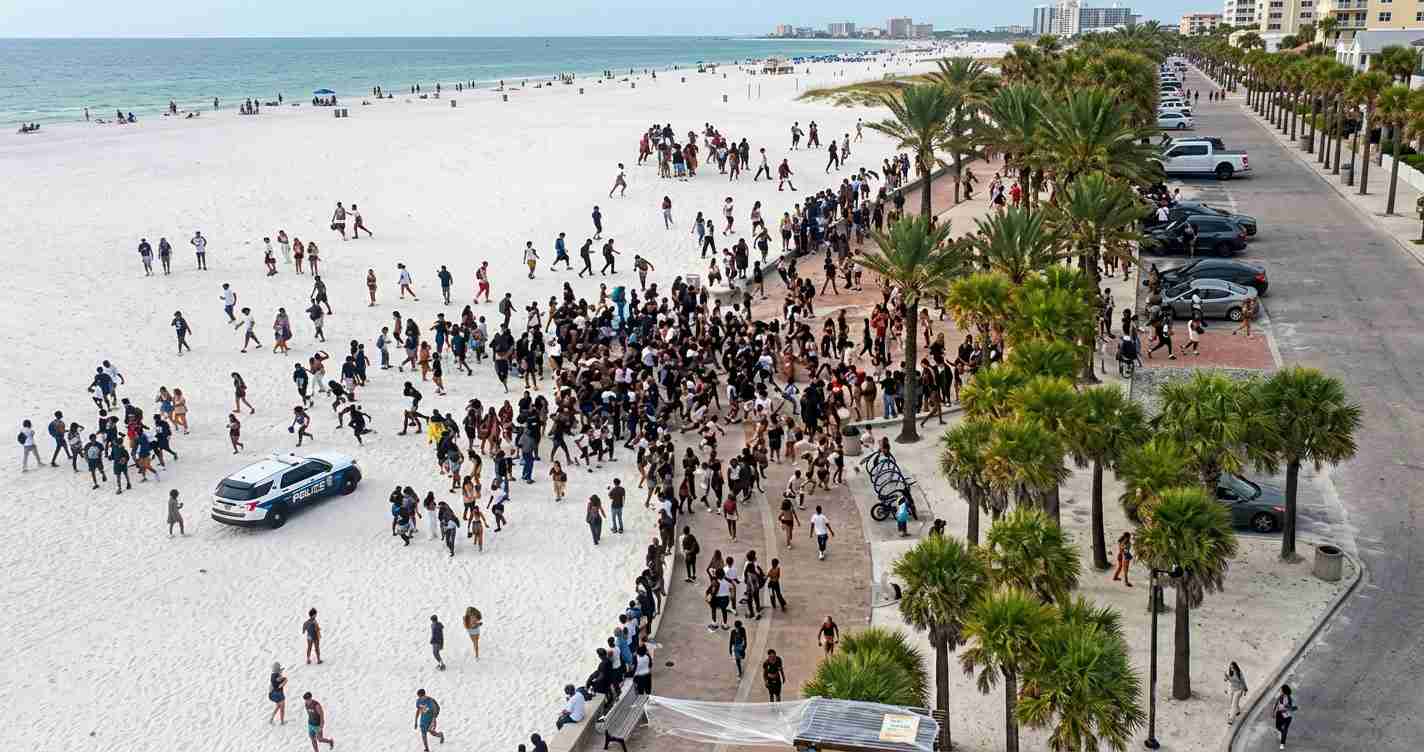
St. Augustine Beach police stop planned pier “teen takeover” after social‑media monitoring flags event
St. Augustine Beach police prevented a planned “teen takeover” at the city pier after real‑time social‑media monitoring flagged the unsanctioned event, allowing officers to post a cancellation notice, warn the public and position extra patrols before the gathering began.
- Early detection: The St. Johns County ARTIC unit flagged an online flyer, giving police time to act.
- Preemptive deterrence: Police posted a “Canceled” notice, issued public warnings and staged officers at the pier.
- No large turnout: The takeover did not materialize at scale and no charges were filed.
- Broader concern: Teen takeovers can rapidly swell, strain small departments, and sometimes escalate to violence.
What happened in St. Augustine Beach
Local authorities say the planned takeover was halted before it began. Chief Daniel Carswell told Fox News Digital that the St. Johns County Sheriff’s Office Real‑Time Intelligence Center (ARTIC) discovered an online flyer advertising a “Pull up. Turn Up. Take over.” event scheduled for 2 p.m. on Thursday at the St. Augustine Beach pier.
After ARTIC alerted the department, St. Augustine Beach police posted the flyer with a large “Canceled” banner to discourage attendance, issued social‑media warnings and positioned additional officers at the pier during the planned hour. Chief Carswell described the operation as preemptive, noting the steps were intended to head off disruption and property damage.
“We’re a beach town, so we’ve always had spring break crowds that show up — but nothing that’s been organized like this with the sole intent of just causing disruption,” Carswell said to Fox News Digital.
How police detected and shut down the event
The key tool was electronic monitoring. Chief Carswell credited ARTIC with routine scanning of social media and online activity for possible threats and large gatherings. The early alert allowed the small police force to post the cancellation publicly and to prepare a visible presence on the pier.
That approach mirrors tactics used elsewhere: agencies often combine monitoring with early public messaging and pre‑staged officers to reduce turnout. See national reporting for context via ABC News coverage and local video accounts such as the Pasco County / The Grove video and the Clearwater Beach video.
The St. Augustine Beach department used clear public messaging to label the event unsanctioned and warn of “zero tolerance,” a tactic intended to de‑amplify online buzz and deter would‑be attendees. Police say they then placed extra officers at the pier during the planned timeframe to respond if people arrived.
Why teen takeovers worry police
Law enforcement treats takeover promotions seriously because similar gatherings have led to arrests, fights and shootings. Events coordinated on social media can swell quickly and escape the control of organizers or authorities, creating unpredictable and sometimes violent situations.
Examples in Florida:
- In Tampa, a park takeover produced dozens of arrests on charges ranging from narcotics to unlawful weapons possession after fights broke out (see ABC News coverage).
- A Clearwater Beach takeover escalated into a shooting; a 16‑year‑old was charged with attempted second‑degree murder and related offenses (see Clearwater Beach video).
- In Pasco County, coordinated pre‑staging of dozens of patrol cars helped prevent major incidents at The Grove after online promotion (see Pasco County / The Grove video).
Officers emphasize unpredictability — turnout “could be tens, it could be hundreds” — which complicates staffing. For a roughly 25‑officer department like St. Augustine Beach PD, diverting personnel to one location can leave other areas under‑protected, sometimes requiring officers to be called in on days off or relying on neighboring agencies for mutual aid.
Law‑enforcement strategies and the debate over response
Cities are balancing enforcement with prevention. St. Augustine Beach’s method was to detect, warn and deter. Other jurisdictions combine monitoring with community outreach and sanctioned alternatives to reduce unsupervised gatherings.
Common tactics include:
- Real‑time social‑media monitoring via intelligence centers like ARTIC to flag events early.
- Public warnings and “Canceled” notices to reduce virality and discourage attendance.
- Deployment of extra officers and mutual‑aid requests to ensure adequate on‑scene manpower.
- Targeted enforcement such as curfews during high‑risk weekends.
Experts argue enforcement alone may not resolve the issue. Some police departments and community groups offer supervised alternatives — late‑night sports, community gatherings with security, and youth outreach programs. Initiatives like “Takeover with a Purpose” and youth‑led activities aim to give teens safer, sanctioned places to socialize and reduce the need for heavy policing (see ABC News coverage).
Implications for the World
Economic impact: Unplanned mass gatherings can damage local businesses and require costly police overtime. Even when a takeover is stopped early, expenses for extra staffing and mutual aid can burden small jurisdictions, and tourism towns risk reputational harm if events turn violent.
Political consequences: Viral unsanctioned events spur debate on policing, youth policy and public safety. Some governments may expand intelligence centers for early detection, while civil‑liberties advocates raise concerns about surveillance and free‑speech implications.
Social and cultural effects: Teen takeovers highlight how online platforms mobilize youth and the gap between teens’ desire for public gatherings and the availability of supervised venues. Responses that combine enforcement with opportunities for safe gatherings may reduce repeat incidents.
Practical applications
Municipalities can consider:
- Investing in regional intelligence sharing and real‑time monitoring systems.
- Building local youth programs and supervised alternatives to unsanctioned meetups.
- Preparing rapid communication plans to counter online spread, including clear “Canceled” messaging.
- Coordinating mutual aid to reduce strain on small departments during peaks.
The St. Augustine Beach case demonstrates a model: detect an online threat, post clear public notices labeling the event unsanctioned, and position officers to deter large turnouts while minimizing arrests.
Sources
- Fox News Digital reporting based on interviews with St. Augustine Beach Police Chief Daniel Carswell.
- ABC News coverage of teen takeovers and law‑enforcement responses
- Local video reporting on Pasco County / The Grove
- Video reporting on Clearwater Beach shooting